
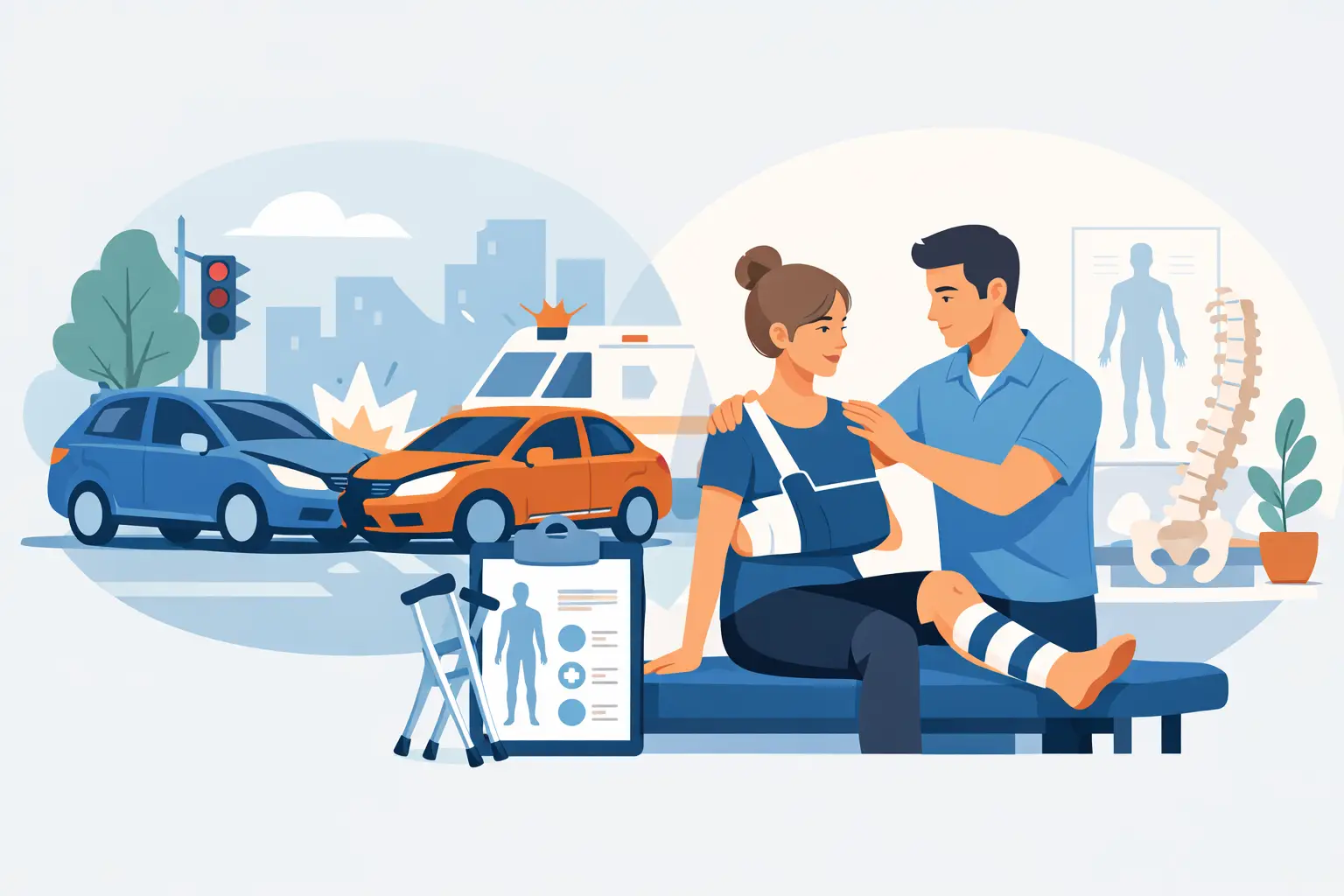
Motor Vehicle Accident Physiotherapy Help
The day after a crash is often harder than the day of it. Adrenaline wears off, stiffness sets in, and simple movements like turning your head, sitting at your desk, or getting out of bed can suddenly feel difficult. That is where motor vehicle accident physiotherapy can make a real difference. Early assessment and the right treatment plan can help reduce pain, improve movement, and keep short-term injuries from turning into long-term problems.
Not every car accident injury looks dramatic. In fact, many people walk away from a collision thinking they are fine, only to notice neck pain, headaches, back tightness, shoulder strain, dizziness, or jaw discomfort in the following days. Some symptoms appear right away. Others build gradually as inflammation, muscle guarding, and joint irritation increase. Waiting too long to get help can make recovery slower and more frustrating than it needs to be.
Why motor vehicle accident physiotherapy matters early
After a motor vehicle accident, your body often reacts by protecting injured areas. Muscles tighten, movement becomes guarded, and normal patterns like walking, reaching, bending, or sleeping can change. While that response is common, it is not something you want to leave unchecked for weeks.
Physiotherapy helps identify what has actually been affected. That may include soft tissue strain, reduced joint mobility, postural changes, nerve irritation, concussion-related symptoms, or balance problems. A licensed physiotherapist looks at how your pain behaves, what movements are limited, and how the injury is affecting your daily life. The goal is not just to label the problem. The goal is to create a practical path forward.
Early treatment can also help prevent compensation patterns. If your neck hurts, you may start moving your shoulders differently. If your low back is aggravated, you may shift weight unevenly when you stand or walk. Those workarounds are understandable, but over time they can create new pain in areas that were not injured in the crash.
What injuries can happen after a collision?
Whiplash is one of the most common injuries after a rear-end or sudden-impact collision, but it is far from the only one. Many patients also deal with mid-back strain, low back pain, shoulder injuries from bracing against the steering wheel, hip irritation, knee pain from dashboard impact, and headaches related to tension or joint dysfunction.
Some people experience dizziness, visual sensitivity, nausea, or trouble concentrating after a crash. Others notice jaw pain, ringing in the ears, numbness, or unusual fatigue. Recovery is rarely one-size-fits-all. Two people can be in similar accidents and have very different symptom patterns based on position in the vehicle, previous injuries, age, activity level, and general health.
That is why a careful assessment matters. Good treatment starts by understanding the full picture, not by assuming every accident injury should be treated the same way.
What to expect at your first appointment
Your first physiotherapy visit should feel clear and purposeful. You will usually be asked about the accident itself, your symptoms, your medical history, and how your pain is affecting work, sleep, driving, childcare, exercise, and other daily activities. That context is important because treatment should match your real-life goals.
The physical assessment may include checking range of motion, strength, balance, posture, joint mobility, nerve sensitivity, and movement patterns. If you have signs of concussion, vestibular issues, or jaw involvement, those may need specific testing as well. In some cases, your physiotherapist may recommend coordinated care with other providers if your injuries go beyond a straightforward soft tissue strain.
You should also leave the appointment with a plan you understand. That includes what is being treated, what the early priorities are, how often you may need care, and what you can safely do at home. Honest guidance matters here. Some patients improve quickly. Others need a longer course of treatment, especially if symptoms are widespread or if care starts later.
How treatment works after a motor vehicle accident
Motor vehicle accident physiotherapy is focused on restoring function, not just chasing pain. In the early stage, treatment often aims to calm irritated tissues, reduce stiffness, and help you move more comfortably. That may involve manual therapy, guided mobility work, pain-relief strategies, and simple exercises to keep your body from becoming more guarded.
As pain becomes more manageable, the focus usually shifts toward rebuilding strength, coordination, and confidence with movement. That can include postural retraining, neck and core stability work, balance exercises, and progressive return to normal tasks. If driving triggers symptoms, or sitting at work causes flare-ups, your plan should address those specific demands.
Home exercise is usually part of recovery, but it should be realistic. A good program is not about handing you a long sheet of generic exercises. It should fit your injury, your schedule, and your current tolerance. Doing too little can slow progress, but doing too much too soon can make symptoms worse. This is one of the biggest areas where professional guidance helps.
When integrated care makes a difference
Some accident injuries improve well with physiotherapy alone. Others benefit from a coordinated approach. If you are dealing with muscle spasm, joint restriction, soft tissue pain, headaches, dizziness, or stress-related tension, a multidisciplinary clinic can be helpful because treatment can be adjusted across services instead of split between unrelated providers.
For example, a patient may need physiotherapy to restore movement and strength, massage therapy to reduce guarding and soft tissue tension, and concussion or vestibular rehabilitation to address dizziness or visual symptoms. Another patient may benefit from acupuncture for pain management or TMJ treatment if jaw symptoms began after impact. The best approach depends on the presentation, not on a standard formula.
This is where integrated clinics can save time and reduce confusion. When providers work together, treatment tends to be more consistent and goal-oriented.
Recovery timelines are not the same for everyone
One of the most common questions after a crash is, “How long will this take?” The honest answer is that it depends. Mild soft tissue injuries may improve in a matter of weeks. More complex cases involving concussion symptoms, nerve irritation, multiple painful areas, or pre-existing conditions may take longer.
Work demands also matter. Someone with a physically demanding job may need a different progression than someone who works from home. A parent lifting children, a tradesperson climbing ladders, and an office worker spending eight hours at a computer will all face different challenges during recovery.
Progress is not always perfectly linear either. It is common to feel better, then have a flare-up after a busy day, poor sleep, or a return to driving. That does not always mean something is wrong. It may just mean your body needs a more gradual build back to full activity.
Signs you should not ignore
After an accident, some symptoms should be assessed promptly. These include severe or worsening headaches, dizziness, numbness, weakness, significant pain that limits basic function, poor balance, visual changes, jaw locking, or symptoms that are not improving after several days. Even when symptoms seem mild, persistent stiffness and reduced movement are worth checking.
The sooner the problem is understood, the easier it is to make smart decisions about care. Trying to push through pain without guidance often leads to delayed healing and more time away from normal routines.
Choosing the right clinic for motor vehicle accident physiotherapy
Experience matters, but so does communication. You want a clinic that listens, explains your plan clearly, tracks your progress, and adjusts treatment based on how you are actually responding. Accident recovery can be stressful enough without feeling rushed or unsure of what comes next.
For patients in northwest Calgary communities like Royal Oak, Rocky Ridge, Tuscany, and Nolan Hill, having access to coordinated rehabilitation under one roof can make treatment simpler and more consistent. Royal Oak Physio, Chiro, and Massage Clinic takes that practical approach, with personalized care designed around pain relief, movement, and real-life recovery goals.
After a crash, the right next step is not to wait and hope stiffness disappears on its own. It is to get assessed, understand what your body needs, and start moving forward with a plan that makes sense for your recovery.