
Can Acupuncture Help Neck Pain? What to Expect
A stiff neck can make a workday, a shoulder check while driving, or a night of sleep feel much harder than it should. Can acupuncture help neck pain? For many people, it can be a useful part of a broader treatment plan, particularly when muscle tension, persistent soreness, or restricted movement are keeping them from moving comfortably.
Acupuncture is not a one-size-fits-all fix, and it should not replace a proper assessment when pain is severe, follows an accident, or comes with concerning symptoms. But when it is provided by a trained practitioner and paired with the right rehabilitation plan, it may help reduce pain, settle tight muscles, and make it easier to return to normal activity.
Why neck pain often lingers
Neck pain rarely has just one cause. Long hours at a computer, repeated looking down at a phone, an awkward sleeping position, stress-related muscle tension, and reduced upper-back strength can all contribute. Sports injuries, workplace demands, and motor vehicle accidents can also leave the neck sensitive and guarded long after the initial injury.
When the neck hurts, people often move less to avoid aggravating it. That is understandable, but too much protection can create another problem: muscles become stiffer, confidence in movement drops, and everyday tasks start to feel threatening. Effective care needs to address pain while also helping you gradually restore comfortable movement and strength.
Can acupuncture help neck pain and stiffness?
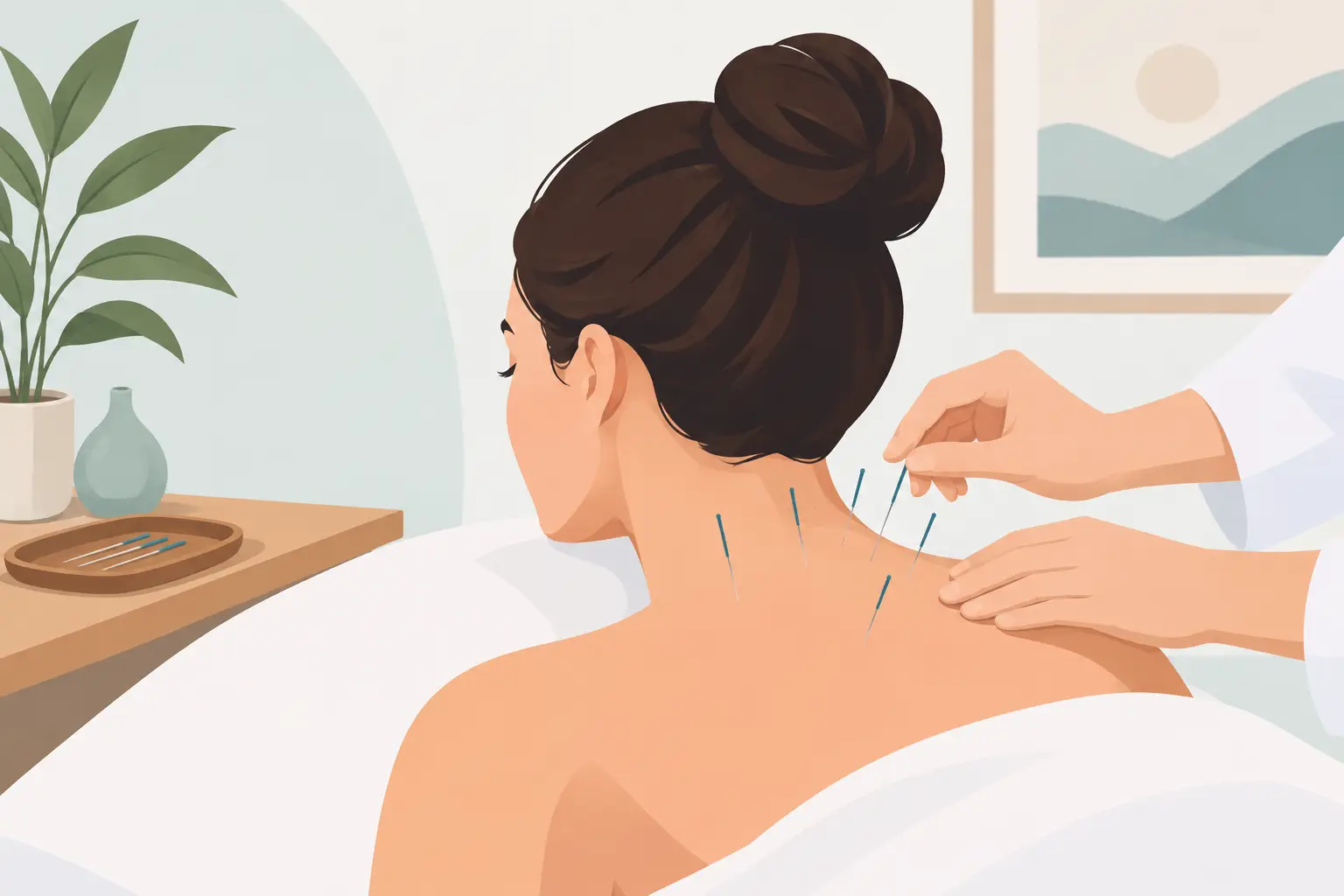
Acupuncture involves placing very fine, sterile needles at specific points in the body. In a rehabilitation setting, treatment may focus on areas of muscle tension in the neck, shoulders, upper back, or related regions that are contributing to how you move and feel.
Research suggests acupuncture may provide short-term pain relief and improved function for some people with neck pain, especially non-specific neck pain or discomfort linked to muscle tension. The response varies. Some patients notice an easier range of motion after one session, while others need several treatments before they see a meaningful change.
Its practical value is often that it can calm pain enough for you to do the work that supports lasting recovery. If turning your head, sitting at your desk, or performing prescribed exercises is too uncomfortable, reducing symptoms can create a better starting point for rehabilitation.
Acupuncture is usually most helpful when it is one component of a personalized plan rather than the entire plan. Depending on your assessment, that plan may also include physiotherapy exercises, manual therapy, posture and workstation advice, massage therapy, or chiropractic care. The right combination depends on the cause of your pain, your health history, and your goals.
What acupuncture treatment for neck pain feels like
Many people are nervous before their first appointment because they picture an injection. Acupuncture needles are much thinner than needles used for bloodwork or vaccines. You may feel a brief pinch, pressure, warmth, tingling, or a dull ache when a needle is placed. These sensations are generally mild and temporary.
Your practitioner should begin by discussing your symptoms, medical history, daily activities, and what you want to get back to doing. They will assess how your neck moves and consider related areas such as your shoulders, upper back, jaw, and posture. Neck pain can be influenced by more than the spot that hurts.
During treatment, you will be positioned comfortably and the practitioner will use single-use sterile needles. Needles commonly remain in place for a short period, although the exact approach and timing can vary. You may feel relaxed or mildly tired afterward. Some people experience temporary soreness or minor bruising, much like they might after other hands-on treatments.
A good treatment plan sets clear expectations. Rather than promising a cure after one visit, your provider should explain what progress may look like, how many sessions might be reasonable to try, and how treatment will be adjusted based on your response.
When acupuncture may be a good fit
Acupuncture may be worth considering if your neck pain is muscular, persistent, or limiting your ability to participate in active recovery. It can be particularly useful for people who carry tension through the neck and shoulders, wake with stiffness, or find that desk work repeatedly flares their symptoms.
It may also support recovery after a strain or whiplash-type injury, but this is where a thorough assessment matters. Following a motor vehicle accident, pain can involve joints, muscles, nerves, headaches, dizziness, or concussion-related symptoms. The treatment plan should reflect the full picture, not simply focus on one painful area.
For active people, acupuncture can sometimes help manage symptoms while they build back strength, mobility, and sport-specific tolerance. For office workers, it may reduce the pain barrier that makes regular movement breaks and corrective exercises difficult to maintain.
The goal is not to make you dependent on treatment. It is to help you move better, hurt less, and build the capacity to manage daily life with greater confidence.
When neck pain needs medical attention first
Most neck pain is not an emergency, but certain symptoms should be assessed promptly. Seek urgent medical care if neck pain begins after a significant fall, collision, or other trauma, especially if it is severe or worsening. You should also seek medical attention for new arm or hand weakness, numbness that is spreading, loss of coordination, trouble walking, severe headache, fever, unexplained weight loss, or changes in bowel or bladder control.
Acupuncture may not be appropriate in every circumstance. Tell your practitioner if you are pregnant, have a bleeding disorder, take blood-thinning medication, have a pacemaker, have an active infection, or have other medical conditions that could affect treatment. Honest communication helps your provider choose the safest approach.
Make the relief last with active rehabilitation
Pain relief matters, but it is only part of recovery. If the habits, loading demands, or movement limits behind your neck pain are not addressed, symptoms may return as soon as work, training, or stress picks up again.
A well-rounded plan may include gentle neck mobility, upper-back movement, strengthening for the deep neck and shoulder-blade muscles, and gradual exposure to activities that have become difficult. It may also include simple changes to your workstation or driving position. The best exercises are not necessarily the most complicated ones. They are the ones that match your current ability and that you can perform consistently.
At Royal Oak Physio, Chiro, and Massage Clinic, coordinated care can make this process simpler. Your practitioner can help determine whether acupuncture makes sense for your symptoms and combine it with other appropriate services under one plan. That means less guesswork and a clearer path from pain control to functional progress.
Questions people often ask
How many acupuncture sessions are needed for neck pain?
There is no fixed number. Some people feel a difference within one or two sessions, while persistent pain may require a short series of visits alongside active rehabilitation. Your response to the first few treatments should guide the plan. If there is no meaningful progress, your provider should reassess rather than continue the same approach indefinitely.
Is acupuncture safe for neck pain?
When performed by a properly trained, licensed practitioner using sterile technique, acupuncture is generally considered safe. Mild temporary soreness, small bruises, or lightheadedness can occur. A complete health history and careful assessment are essential, particularly for pain after an accident or symptoms involving numbness, weakness, or dizziness.
Should I rest after acupuncture?
Most people can return to normal daily activity after treatment. Gentle movement is often helpful. Your practitioner may recommend avoiding unusually strenuous exercise for the rest of the day if you are sore or fatigued, but complete rest is not usually the goal.
If your neck has become the reason you avoid work, sleep poorly, or stop doing activities you enjoy, you do not have to simply push through it. A focused assessment can identify whether acupuncture, active rehabilitation, or a combination of therapies can help you take the next comfortable step forward.