
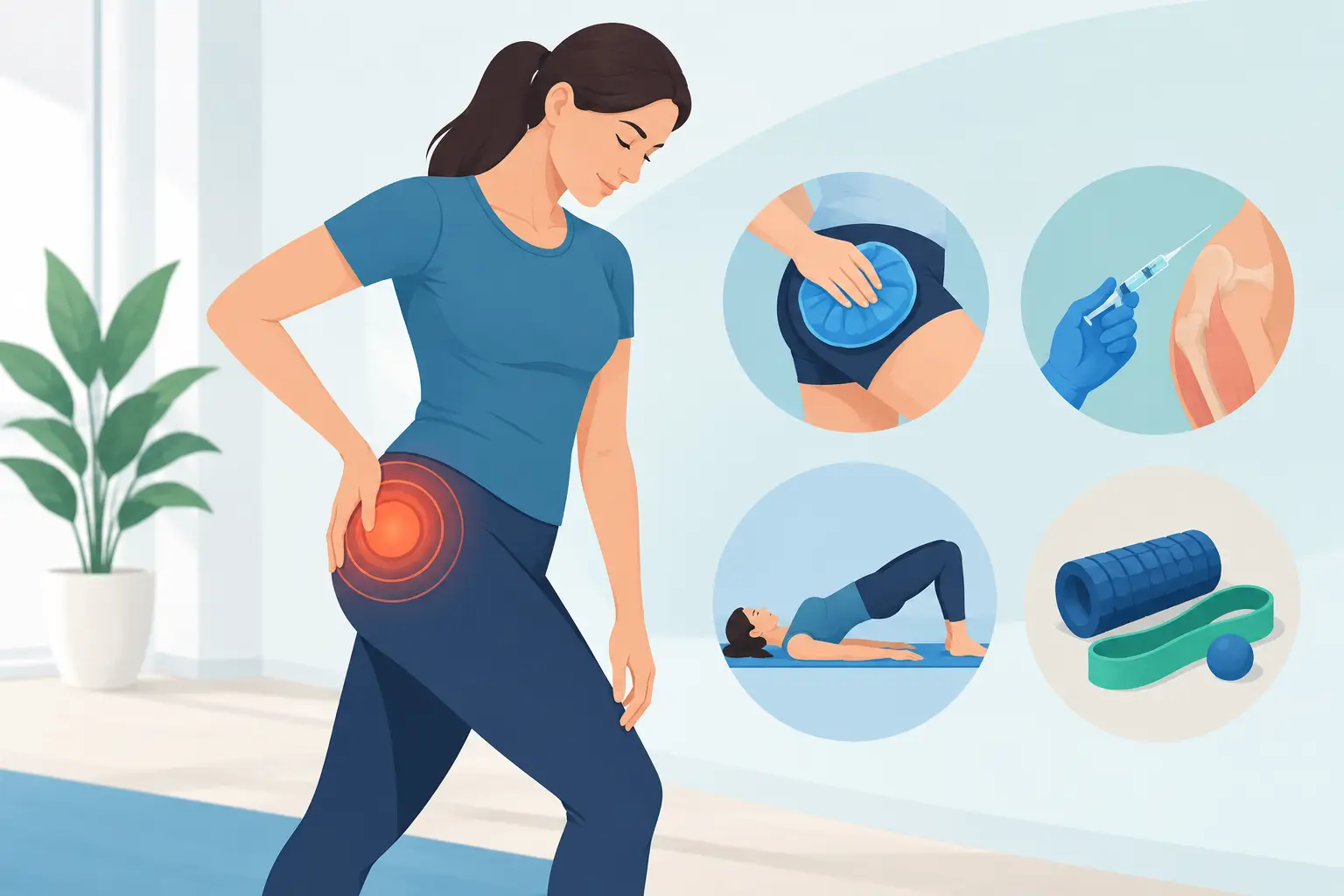
Best Treatments for Hip Bursitis That Help You Move
That sharp ache on the outside of your hip can make simple routines unexpectedly difficult. Sleeping on one side, climbing stairs, getting out of the car, or taking a walk through the neighbourhood may all become painful. The best treatments for hip bursitis do more than calm an irritated area for a few days. They reduce the strain causing the pain and build the strength and movement control needed to keep it from returning.
Hip pain that feels like bursitis is common, especially in active adults, runners, people whose work involves standing, and people who have recently changed their exercise routine. It also affects people who spend long periods sitting, have lower-back or knee issues that alter how they walk, or are recovering from an injury. The right treatment depends on what is actually irritating the tissues around your hip.
Is It Really Hip Bursitis?
The term hip bursitis usually refers to irritation of a small fluid-filled cushion called the bursa, often on the bony outside of the hip. Many people with this pattern of pain are now diagnosed with greater trochanteric pain syndrome. This broader term recognizes that the gluteal tendons and surrounding muscles can also be involved.
Pain is often tender when you press the outside of the hip. It may worsen when lying on that side, walking uphill, standing on one leg, crossing your legs, or taking longer walks. The discomfort can travel down the outer thigh, but it does not usually extend below the knee.
That distinction matters because a painful hip is not always a bursa problem. Osteoarthritis, a lower-back condition, a tendon injury, a stress fracture, or pain referred from another area can feel similar. A thorough assessment helps determine what is driving your symptoms before treatment begins.
The Best Treatments for Hip Bursitis Start With Load Management
Rest does not have to mean stopping all movement. In fact, completely avoiding activity for too long can leave the hip weaker and more sensitive when you try to return to normal life. The more practical approach is relative rest: temporarily reducing the movements that clearly aggravate pain while maintaining comfortable activity.
For example, you may need to shorten walks, avoid hills for a period, pause running, or reduce deep squats and side-to-side drills. If side sleeping is painful, try sleeping on your back with a pillow under your knees, or place a thick pillow between your knees when lying on the more comfortable side. Avoid hanging one hip out while standing, crossing your legs, or sitting in low chairs for extended periods if these positions trigger symptoms.
The goal is not to avoid every sensation. Mild discomfort during rehabilitation can be acceptable, but pain that becomes sharp, increases significantly afterward, or remains worse the next day is a sign that the activity level may be too high. A physiotherapist can help you find a realistic starting point rather than asking you to put your life on hold.
Physiotherapy Builds the Support Your Hip Needs
Targeted physiotherapy is often the cornerstone of lasting recovery. A licensed physiotherapist assesses your walking pattern, hip strength, range of motion, balance, training habits, work demands, and any contribution from your back, pelvis, knee, or foot mechanics. This prevents a one-size-fits-all approach.
Early treatment may focus on gentle exercises that activate the gluteal muscles without compressing the sore outer hip. As symptoms settle, your program can progress toward strengthening the hip abductors, glutes, core, and legs. The purpose is straightforward: your hip needs enough capacity to control your pelvis and leg during walking, stairs, lifting, running, or sport.
Exercises are selected and progressed according to your pain level and goals. Someone training for a race needs a different return-to-activity plan than someone whose main goal is sleeping comfortably and managing stairs at work. Consistency matters more than intensity. A few well-chosen exercises performed correctly are usually more useful than a long routine that is difficult to maintain.
Hands-On Care Can Ease Pain and Improve Movement
Hands-on treatment may help reduce muscle guarding and improve movement when used alongside exercise and activity changes. Depending on your assessment, this can include joint mobilization, soft-tissue treatment, or techniques that address restricted movement in the lower back, pelvis, hip, or surrounding muscles.
Massage therapy may be useful when tight or overworked muscles around the hip, thigh, or lower back are contributing to discomfort. Chiropractic care may also be considered where joint stiffness or movement patterns in the spine and pelvis affect hip loading. Neither approach should be treated as a stand-alone cure. The most dependable results come when hands-on care creates a window for better movement, strengthening, and a gradual return to the activities you value.
What About Ice, Medication, Shockwave, or Injections?
Ice can provide short-term symptom relief after an activity flare. Apply it with a barrier between the ice pack and your skin for short periods rather than using it for long stretches. Heat may feel better for muscle tightness, though it is less likely to help a hot, irritated area immediately after overuse.
Over-the-counter anti-inflammatory medication can help some people manage pain in the short term, but it is not right for everyone. Speak with a pharmacist or physician first if you have stomach, kidney, heart, blood pressure, or bleeding concerns, or if you take prescription medication. Pain relief can make movement easier, but it does not correct the reason the hip became overloaded.
Shockwave therapy may be considered for persistent outer-hip pain, particularly when tendon involvement is suspected and a well-managed strengthening program has not delivered enough improvement. It is not usually the first step for a recent flare, and it can cause temporary soreness. Your provider should discuss whether your symptoms, medical history, and stage of recovery make it a sensible option.
Corticosteroid injections can reduce pain quickly for some people, particularly when symptoms are severe and preventing sleep or participation in rehabilitation. The trade-off is that relief may be temporary, and repeated injections near tendons are generally approached carefully. An injection is most useful when it supports a broader recovery plan, not when it becomes the only treatment.
Surgery is rarely needed. It is generally reserved for unusual, severe, or persistent cases after a proper diagnosis and a substantial trial of conservative treatment.
Everyday Changes That Protect a Sensitive Hip
Small adjustments can reduce the repeated compression and strain that keep outer-hip pain active. Review the shoes you use for walking and work, especially if they are worn down or no longer supportive. If one leg appears to be loading differently, an assessment can help determine whether footwear, orthotics, mobility restrictions, or strength deficits are contributing.
At work, alternate between sitting and standing when possible. Avoid standing with all your weight dropped into one hip. If you drive frequently, take brief movement breaks on longer trips and adjust the seat so you are not climbing out of a very low position. For active people, increase distance, hills, speed, or training volume one variable at a time. A sudden jump in all of them is a common reason symptoms return.
Weight management may reduce hip load for some people, but it should never be presented as the only answer. Hip bursitis can affect people of every body size. Better strength, pacing, sleep positioning, and movement habits remain valuable regardless of weight.
When to Seek Assessment Promptly
Book an assessment if hip pain has not improved after a couple of weeks of sensible activity modification, keeps waking you at night, or repeatedly returns when you resume normal activity. Earlier care can be especially helpful if pain is changing how you walk or limiting work, caregiving, exercise, or sleep.
Seek urgent medical attention for severe pain after a fall, an inability to bear weight, fever, a hot or visibly swollen joint, unexplained weight loss, numbness or weakness in the leg, or new bladder or bowel changes. These symptoms need medical assessment rather than self-treatment.
At Royal Oak Physio, Chiro, and Massage Clinic, care can be coordinated across physiotherapy, massage therapy, chiropractic care, and selected treatment options based on your assessment and recovery goals. The focus is practical: reduce pain, restore confident movement, and give you a plan that works in daily life.
You do not need to wait until hip pain has forced you to stop everything you enjoy. The right first step is an assessment that identifies what your hip needs now, then turns that information into steady, measurable progress.