
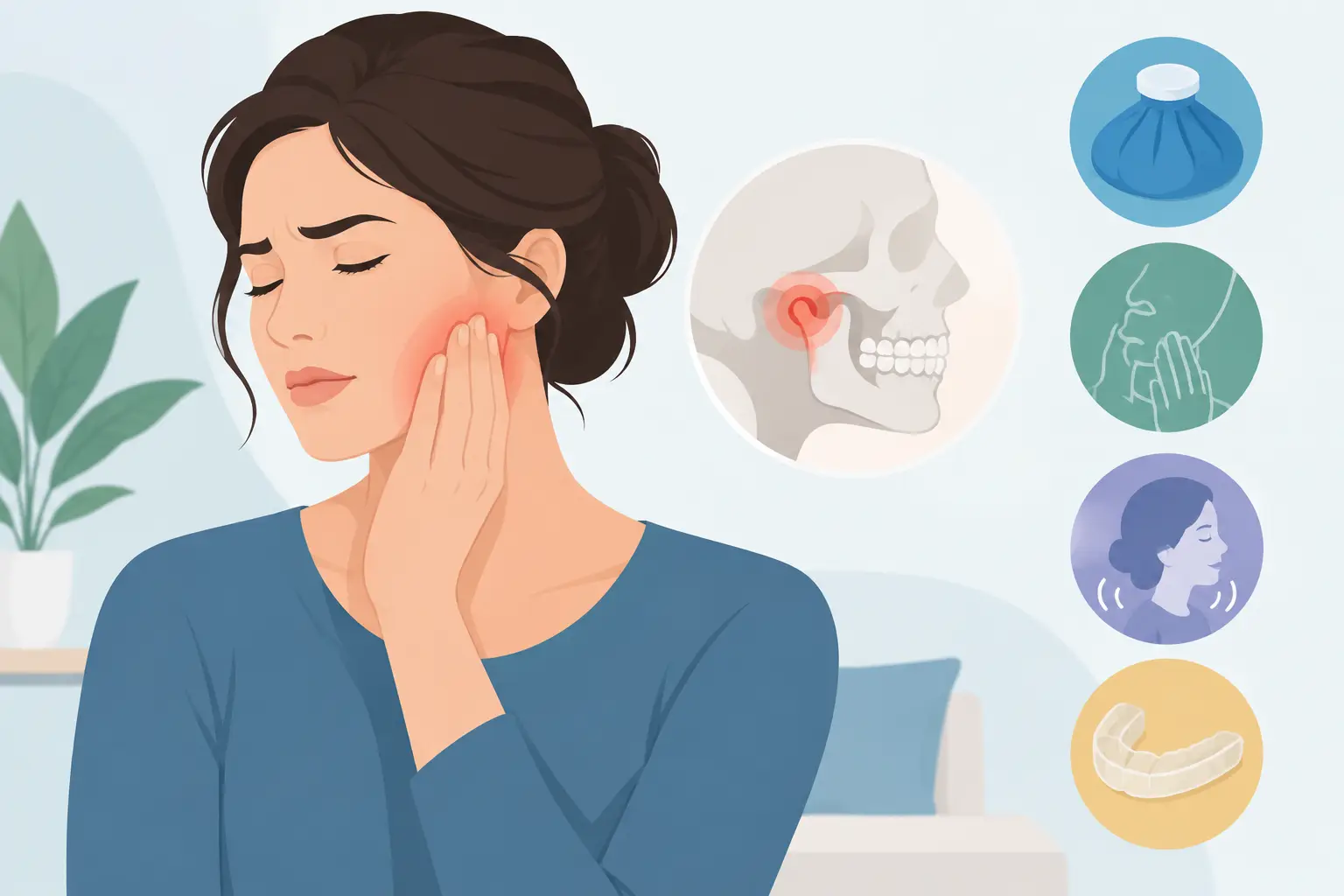
Your Practical Guide to Jaw Pain Treatment
Jaw pain can make ordinary parts of the day unexpectedly difficult. Chewing lunch, speaking in a meeting, yawning, or waking with a sore face can all become reminders that something is not moving well. This guide to jaw pain treatment explains what may be driving your symptoms, what you can safely do at home, and how personalized TMJ care can help you return to easier, more comfortable movement.
Start by understanding what your jaw is telling you
The temporomandibular joints, often called TMJs, connect your lower jaw to your skull. They work with the muscles of your face, neck, and upper back whenever you chew, speak, swallow, or yawn. Because this system is active all day, a small issue can become persistent when the joint or surrounding muscles are repeatedly irritated.
Jaw pain is not always caused by the jaw itself. Tight neck muscles, forward-head posture during desk work, stress-related clenching, a recent dental procedure, or a blow to the face can all change how the jaw moves. Some people notice a dull ache near the ear. Others have clicking, limited opening, headaches, facial tension, tooth sensitivity, or pain that travels into the neck and shoulders.
A click is not automatically a problem. Many people have painless clicking with normal jaw movement. It deserves more attention when it is painful, new, paired with locking, or makes eating difficult.
When jaw pain needs urgent assessment
Most jaw pain is musculoskeletal and responds well to conservative care, but certain symptoms should not be ignored. Seek urgent medical attention for jaw pain with chest pressure, shortness of breath, sweating, nausea, or pain spreading into the arm, shoulder, or back. These can be signs of a medical emergency rather than a TMJ concern.
You should also arrange prompt assessment if you have significant facial swelling, fever, a suspected infection, an inability to open or close your mouth after an injury, sudden changes in your bite, numbness, or severe worsening pain. A dentist or physician may need to rule out tooth, sinus, nerve, or inflammatory conditions before rehabilitation begins.
A practical guide to jaw pain treatment
The right treatment depends on the source of the problem. For example, jaw discomfort after a hard hit in sport needs a different approach than morning soreness from nighttime clenching. A useful plan starts with an assessment of your jaw movement, symptoms, neck and shoulder posture, daily habits, and relevant health history.
At Royal Oak Physio, Chiro, and Massage Clinic, a licensed practitioner can assess how your jaw, neck, and surrounding muscles are working together. The goal is not simply to chase the painful spot. It is to identify what is maintaining the irritation and create a realistic plan for relief and better function.
Reduce irritation while your jaw settles
When symptoms are flared up, temporary changes can lower the load on irritated tissues. Choose softer foods for a few days if chewing is painful, and cut food into smaller pieces rather than opening wide for large bites. Avoid gum, chewy candy, nail biting, and repeatedly testing whether the jaw still clicks.
Try to keep your teeth slightly apart when you are not eating. Your lips can rest together, but your teeth do not need to touch. This simple resting position can reduce daytime clenching, especially during focused work or stressful moments.
Warmth may help tight, aching muscles around the cheeks, temples, and jaw. Use a warm compress for 10 to 15 minutes if it feels soothing. If the area is newly irritated or swollen after an impact, a cold pack wrapped in a cloth may be more comfortable in the first day or two. Stop any home strategy that increases pain.
Restore comfortable movement, not forced movement
Jaw exercises can be useful, but more is not always better. Aggressively stretching a painful or locking jaw can increase irritation. Early exercises are usually gentle and controlled, aimed at improving awareness and restoring motion without provoking symptoms.
A physiotherapist may teach you how to open and close with the tongue lightly resting on the roof of the mouth, or how to guide the jaw in a straighter path. Treatment may also include hands-on work for the jaw muscles, neck, upper back, and shoulders. If limited neck movement or posture is contributing to your symptoms, addressing those areas can make jaw treatment more effective.
Progress should be measurable. That may mean opening your mouth farther with less pain, finishing a meal more comfortably, waking with fewer headaches, or spending a workday without constant jaw tension.
Address clenching and stress patterns
Clenching is often automatic. It can happen during a difficult drive, while lifting at the gym, when concentrating at a screen, or during sleep. Many people do not realize they are doing it until the muscles are already sore.
A treatment plan may include practical cues to relax the jaw throughout the day, breathing strategies, posture changes, and targeted work for overloaded muscles. If nighttime grinding is suspected, a dentist can assess whether a dental appliance is appropriate. A mouthguard can protect teeth in some cases, but it does not automatically address the muscle tension, joint movement, or neck factors behind the pain. Coordinated care is often the best approach.
Consider complementary care when it fits your needs
Physiotherapy is commonly central to TMJ rehabilitation because it combines assessment, manual therapy, education, and movement retraining. Massage therapy may help reduce tension in the jaw, temples, neck, and shoulders, particularly when stress or desk posture is a major contributor. Acupuncture can also be considered as part of a broader pain-management plan for some patients.
These options are not interchangeable, and no single treatment is right for everyone. The most effective plan is one that matches your diagnosis, comfort level, schedule, and recovery goals. Your practitioner should explain why a recommendation is being made and how progress will be reviewed.
Daily habits that support recovery
Small changes between appointments can protect your progress. Keep screens at a height that does not pull your head forward, take short movement breaks during long computer sessions, and avoid cradling a phone between your shoulder and ear. If you sleep on your stomach with your head turned sharply to one side, experimenting with a more neutral position may reduce morning jaw and neck stiffness.
Pay attention to patterns rather than chasing perfection. Is pain worse after long video calls, a tough workout, certain foods, or stressful deadlines? A brief note on symptoms can help identify triggers and allows your practitioner to adjust treatment with more precision.
Continue normal activity where possible, but scale it intelligently. You do not need to avoid talking or eating altogether. The aim is to reduce aggravating loads temporarily while building tolerance back up.
What to expect from a TMJ assessment
A thorough assessment should feel clear and collaborative. Your practitioner will ask when symptoms began, whether there was an injury or dental change, what makes pain better or worse, and whether you experience headaches, locking, ringing in the ears, or neck pain. They may assess jaw opening, side-to-side motion, muscle tenderness, posture, and movement in your neck and upper back.
From there, you should leave with a practical plan: what is likely contributing to your pain, what treatment will focus on, what you can do at home, and what improvement should look like over the next several visits. Recovery timelines vary. A recent flare-up may settle quickly, while persistent clenching, chronic headaches, or symptoms after an accident can require a more gradual plan.
Get help before jaw pain changes your routine
Jaw pain does not have to become the reason you avoid certain foods, limit conversations, or push through daily headaches. Early assessment can help prevent a short-term irritation from turning into a stubborn pattern. If your jaw is painful, tight, clicking with symptoms, or difficult to move, book an assessment with a qualified practitioner and start working toward a plan that helps you move better and hurt less.