
When to Use Custom Orthotics for Foot Pain
A pair of shoes can look supportive and still leave you with aching arches by lunchtime, heel pain on your first few steps, or knees that complain after a walk. Knowing when to use custom orthotics can help you move beyond trial-and-error inserts and address the way your feet function during real life.
Custom orthotics are prescription devices made to support, cushion, or guide your feet based on an individual assessment. They are not automatically the answer to every foot problem. For the right person, however, they can reduce strain, improve comfort, and make it easier to stay active while recovering from an injury or managing an ongoing condition.
When to use custom orthotics instead of store-bought inserts
Over-the-counter insoles can be useful for mild, short-term discomfort. They may add cushioning to a work shoe, improve the fit of a boot, or provide temporary support during a busy week. But they come in standard shapes and firmness levels. If your symptoms keep returning, a generic insert may not be addressing the reason they started.
Custom orthotics are worth considering when pain is persistent, affects your walking, limits exercise, or returns despite changing shoes and reducing activity. They are also useful when one foot behaves differently from the other, such as a noticeable collapse of the arch on one side, uneven shoe wear, or pain that consistently develops in the same area.
A licensed practitioner can assess more than the shape of your foot. They look at how you stand, walk, balance, and load your joints. That matters because foot pain is not always just a foot issue. The ankle, knee, hip, pelvis, and lower back all influence how force travels through your body.
Symptoms that may point to a need for orthotics
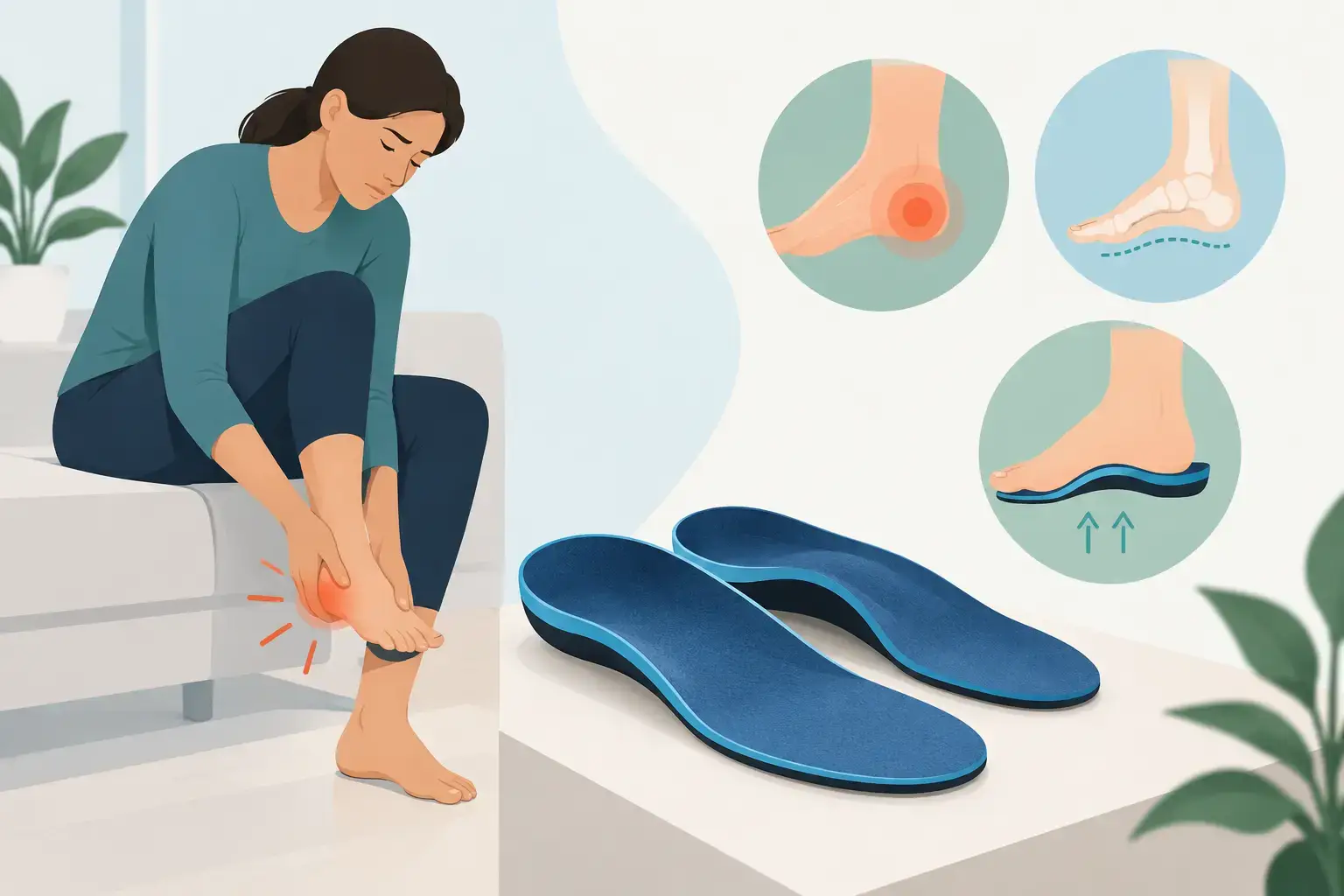
Pain alone does not confirm that you need custom orthotics, but certain patterns make an assessment a sensible next step. One common example is heel pain that is worst with the first steps in the morning or after sitting. This can occur with plantar fasciitis, where the tissue along the bottom of the foot becomes irritated.
Arch pain or fatigue during standing and walking can also be a sign that your foot needs better support or load distribution. People with flat feet may notice their ankles rolling inward, while those with high arches may experience pressure under the heel and ball of the foot because their feet do not absorb shock as effectively.
Custom orthotics may also help when you experience:
- Recurring pain in the heel, arch, forefoot, ankle, shin, knee, hip, or lower back
- Pain that increases during work shifts, running, court sports, hiking, or long walks
- Calluses, corns, or pressure spots that repeatedly form in the same place
- Uneven wear on shoes, especially when one side wears out much faster
- Foot discomfort linked to arthritis, diabetes-related foot concerns, or structural differences
These symptoms can have several causes. An orthotic assessment helps determine whether foot support is likely to be part of the solution or whether another treatment should take priority.
Orthotics can help with more than foot pain
Your feet are your foundation. If they roll inward excessively, stay too rigid, or shift pressure away from one painful area and into another, the effects can move up the kinetic chain. A runner with knee pain, for example, may have a training-load issue, weak hip control, poor footwear, altered foot mechanics, or a combination of factors.
That is why custom orthotics are often considered for recurring knee, hip, and lower-back discomfort, particularly when symptoms are connected to standing, walking, or running. The goal is not to force the body into a perfectly shaped position. It is to improve how forces are managed so irritated tissues are not repeatedly overloaded.
For active adults, this can mean more comfortable runs or fewer flare-ups after recreational sport. For workers who spend hours on hard floors, it may mean less fatigue at the end of a shift. For older adults, appropriate support can improve comfort and confidence with daily walking. Results depend on the diagnosis, the device design, footwear, and the rest of the treatment plan.
Common conditions where custom orthotics may be recommended
Orthotics are commonly used as part of care for plantar fasciitis, Achilles tendon irritation, metatarsalgia, shin splints, bunions, and some forms of knee pain. They may also be recommended for people with flat feet, high arches, leg-length differences, or arthritis affecting the foot and ankle.
For people living with diabetes, orthotics may be designed to reduce pressure and friction in vulnerable areas of the foot. This requires careful assessment, especially if there is numbness, reduced circulation, skin breakdown, or a history of ulcers. New wounds, redness that does not settle, sudden swelling, or changes in skin colour should be assessed promptly rather than managed with an insert alone.
Children can also benefit in selected cases, but not every child with flat feet needs orthotics. Many children have flexible flat feet without pain and develop normally. An assessment is more appropriate when there is pain, frequent tripping, unusual fatigue, one-sided changes, or difficulty keeping up with normal activity.
What a custom orthotic assessment should include
A proper orthotic fitting is not simply stepping on a scanner and ordering an insert. Digital scans and impressions can be useful tools, but the clinical assessment is what gives them meaning.
Your practitioner should discuss your symptoms, health history, activity level, work demands, footwear, and goals. They should examine your feet and ankles, assess joint movement and muscle strength, and observe how you walk or perform relevant movements. If you are a runner, that may include looking at running mechanics. If you work in steel-toe boots, the fit and demands of those boots matter just as much.
The orthotic itself is then selected and designed for your needs. A device for a distance runner may be lighter and more responsive than one intended to offload pressure for arthritis. A firm device can offer greater control, but it is not always more comfortable or more appropriate. Material, arch shape, heel support, and top cover should all reflect the person wearing it.
Orthotics work best as part of a treatment plan
A custom orthotic can be highly useful, but it is rarely a stand-alone cure. If plantar fasciitis developed after a sudden jump in walking volume, the device may reduce strain while physiotherapy helps rebuild calf strength, improve ankle mobility, and guide a gradual return to activity.
The same principle applies to sports injuries and workplace pain. Treatment may include hands-on therapy, targeted exercise, load management, footwear advice, and changes to training or work habits. This broader approach addresses both symptom relief and the factors that make symptoms likely to return.
It is also normal to need an adjustment period. Some people feel comfortable immediately, while others need one to two weeks of gradually increasing wear time. Mild awareness of a new support can be expected. Sharp pain, numbness, blisters, or worsening symptoms are not signs to push through. Contact your practitioner so the fit can be reviewed.
When orthotics may not be the right first step
Not every sore foot needs a custom device. Pain after a single long hike may settle with rest, supportive shoes, and a gradual return to activity. Shoes that are worn out, too narrow, or inappropriate for the activity can also be the main issue.
Orthotics should not delay assessment of significant injuries or medical concerns. Sudden inability to bear weight, severe swelling, a suspected fracture, fever, a hot swollen joint, or an open wound needs timely medical attention. Similarly, persistent numbness, burning, or weakness may require investigation beyond foot support.
The practical question is not, “Do orthotics work?” It is, “What is driving your pain, and would an orthotic meaningfully improve it?” A clear assessment provides a more useful answer than choosing an insert based on a label or online review.
If standing, walking, work, or sport is repeatedly limited by foot or lower-body pain, an individualized assessment can give you a practical path forward. At Royal Oak Physio, Chiro, and Massage Clinic, the focus is on helping you move better, hurt less, and return to the activities that matter to you.