
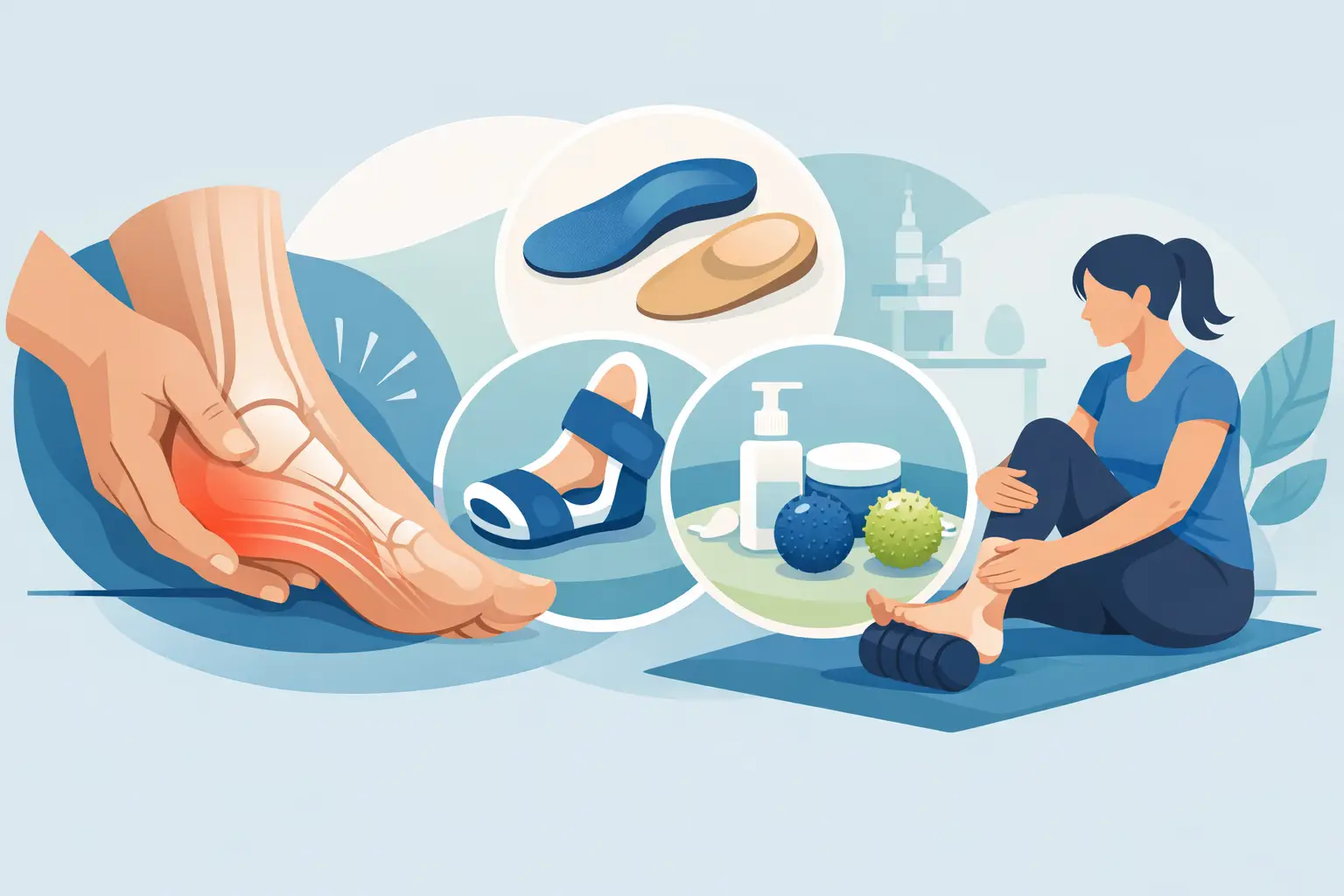
Best Options for Plantar Fasciitis Relief
That first sharp step out of bed can make a normal morning feel like a challenge. The best options for plantar fasciitis are not usually a single product or one treatment session. They are a practical plan that reduces irritation, restores foot and calf strength, and addresses the everyday factors that keep heel pain returning.
Plantar fasciitis is a common cause of heel pain. The plantar fascia is a thick band of tissue along the bottom of the foot that supports the arch and helps transfer force as you walk. When it becomes overloaded and sensitive, pain often develops near the inside of the heel. It may ease after a few minutes of walking, then return after long periods on your feet, exercise, or standing on hard floors.
For many people, improvement is very achievable with consistent care. The right approach depends on your symptoms, activity level, footwear, work demands, and the movement patterns contributing to the problem.
Best options for plantar fasciitis: Start with the basics
Early plantar fasciitis often responds well to reducing the activities that provoke pain while keeping you moving in a manageable way. This does not necessarily mean complete rest. In fact, stopping all activity can leave the calf and foot weaker. The goal is to temporarily modify the load.
If running, long walks, hill training, or court sports trigger heel pain, reducing volume or switching briefly to lower-impact exercise may help. For someone who works on their feet, this may mean taking more frequent sitting breaks, alternating tasks where possible, or using more supportive shoes during long shifts.
Supportive footwear matters. Shoes with a stable sole, reasonable cushioning, and support through the midfoot can reduce strain on the plantar fascia. Worn-out runners, flat slip-on shoes, and unsupportive sandals can be a problem, especially during a flare-up. The best shoe is not always the softest shoe. A shoe that feels stable and comfortable for your foot shape is often more useful than one chosen only for a brand name or trend.
Ice can provide short-term symptom relief after a demanding day or activity. Some people find gentle rolling with a chilled water bottle helpful, although it should not be painful. This can calm a sore heel, but it does not replace a plan to improve strength and movement tolerance.
Stretching and strengthening that targets the cause
Tightness through the calf and limited ankle movement are common contributors to plantar heel pain. When the ankle does not move well, the foot may compensate by placing more strain on the plantar fascia. A physiotherapist can assess whether this is a factor for you and show you how to stretch without aggravating the area.
Calf stretching can be useful when performed regularly and comfortably. Stretching with the knee straight targets more of the gastrocnemius muscle, while bending the knee shifts the stretch toward the deeper soleus muscle. Both can matter for walking and running mechanics.
Plantar fascia-specific stretching may also help, particularly before taking the first steps in the morning. This involves gently pulling the toes back to create a mild stretch along the bottom of the foot. It should feel like a stretch, not a sharp pull at the heel.
Strengthening is equally important. The small muscles within the foot, the calf, and the muscles that control the hip all contribute to how force travels through the leg. Depending on your assessment, a program may include controlled calf raises, foot arch exercises, balance training, and gradual return-to-walking or return-to-running progressions.
There is a trade-off here: doing too little may delay recovery, but advancing exercises too quickly can keep symptoms irritated. A personalized progression gives you clearer markers for when to add repetitions, increase walking distance, or return to sport.
Physiotherapy for persistent heel pain
When heel pain has lasted more than a few weeks, keeps returning, or limits work and exercise, physiotherapy can help clarify why it is not settling. Plantar fasciitis is often used as a broad label, but not all heel pain has the same source. A thorough assessment should consider your ankle mobility, calf capacity, foot posture, gait, footwear, training changes, and relevant health history.
Treatment may include hands-on therapy to improve movement in the foot and ankle, targeted exercise, education around activity modification, and a gradual loading plan. The aim is not simply to make the heel feel better for a day. It is to help you tolerate the movements and activities that matter in your real life.
At Royal Oak Physio, Chiro, and Massage Clinic, licensed practitioners can coordinate a care plan around your goals, whether you need to stand comfortably through a work shift, get back to weekend walks, or return to sport with more confidence.
Orthotics and taping: Useful support, not a cure-all
Orthotics can be one of the better options for plantar fasciitis when they improve comfort and reduce strain during daily activity. They may be particularly helpful for people who spend long hours standing, have noticeable changes in foot mechanics, or need additional support while building strength.
However, orthotics are not automatically necessary for every case. Some people do well with an over-the-counter insert and a better shoe, while others benefit from custom orthotics after a detailed assessment. The fit, shoe type, and your response over time matter more than whether an insert is marketed as premium.
Taping can offer short-term support and can also help determine whether additional arch support may be useful. It is often used as a bridge while symptoms settle and while you work on the strength and mobility factors underneath the pain.
Night splints may be considered if first-step pain in the morning is a dominant symptom. They keep the foot in a position that gently lengthens the calf and plantar fascia overnight. Some people find them very helpful; others find them difficult to sleep in. Comfort and consistency determine whether they are worth using.
When shockwave therapy may be considered
For stubborn plantar fasciitis that has not improved adequately with an appropriate period of conservative care, shockwave therapy may be an option. This treatment delivers acoustic waves to the affected area with the goal of supporting tissue recovery and reducing pain sensitivity.
Shockwave therapy is not a quick fix, and it works best as part of a broader rehabilitation plan that includes appropriate loading, footwear guidance, and movement retraining. It may not be suitable for everyone, including people with certain medical conditions or specific foot concerns. A clinician can determine whether it is appropriate after assessing the nature and duration of your symptoms.
Avoid common recovery mistakes
A few habits can quietly prolong heel pain. Continuing to push through sharp pain during runs or long walks can overload the tissue faster than it can adapt. Replacing activity with complete inactivity can also make the return harder. The most useful middle ground is usually controlled, tolerable loading.
It is also easy to focus entirely on the sore spot. Massage balls, stretching, and ice may feel helpful, but repeated aggressive pressure directly into a very tender heel can worsen irritation. A better strategy is to use symptom relief tools gently while improving calf flexibility, lower-leg strength, and overall walking or running capacity.
Finally, do not assume every heel pain problem is plantar fasciitis. Pain at the back of the heel, numbness or tingling, significant swelling, pain after a fall, or pain that is severe at rest needs proper assessment. People with diabetes, circulation concerns, inflammatory conditions, or changes in sensation in the feet should seek professional advice sooner rather than later.
How long does plantar fasciitis take to improve?
Recovery timelines vary. Some people notice meaningful improvement within several weeks once they change footwear, reduce aggravating activity, and begin targeted exercise. Others need several months, especially if symptoms have been present for a long time or their job makes rest difficult.
Progress is rarely perfectly linear. A busier weekend, an unexpected long shift, or a return to sport can create a temporary flare-up. That does not mean treatment has failed. It usually means the current load exceeded what the foot was ready to handle. Tracking symptoms and adjusting your plan can help you keep moving forward without losing momentum.
Heel pain deserves more than a temporary workaround. With a clear assessment and a plan that fits your daily routine, you can make each step more comfortable and give your feet the capacity to carry you where you want to go.
Pingback: How to Choose Custom Orthotics That Fit Your Needs - Royal Oak Physio, Chiro and Massage Clinic