
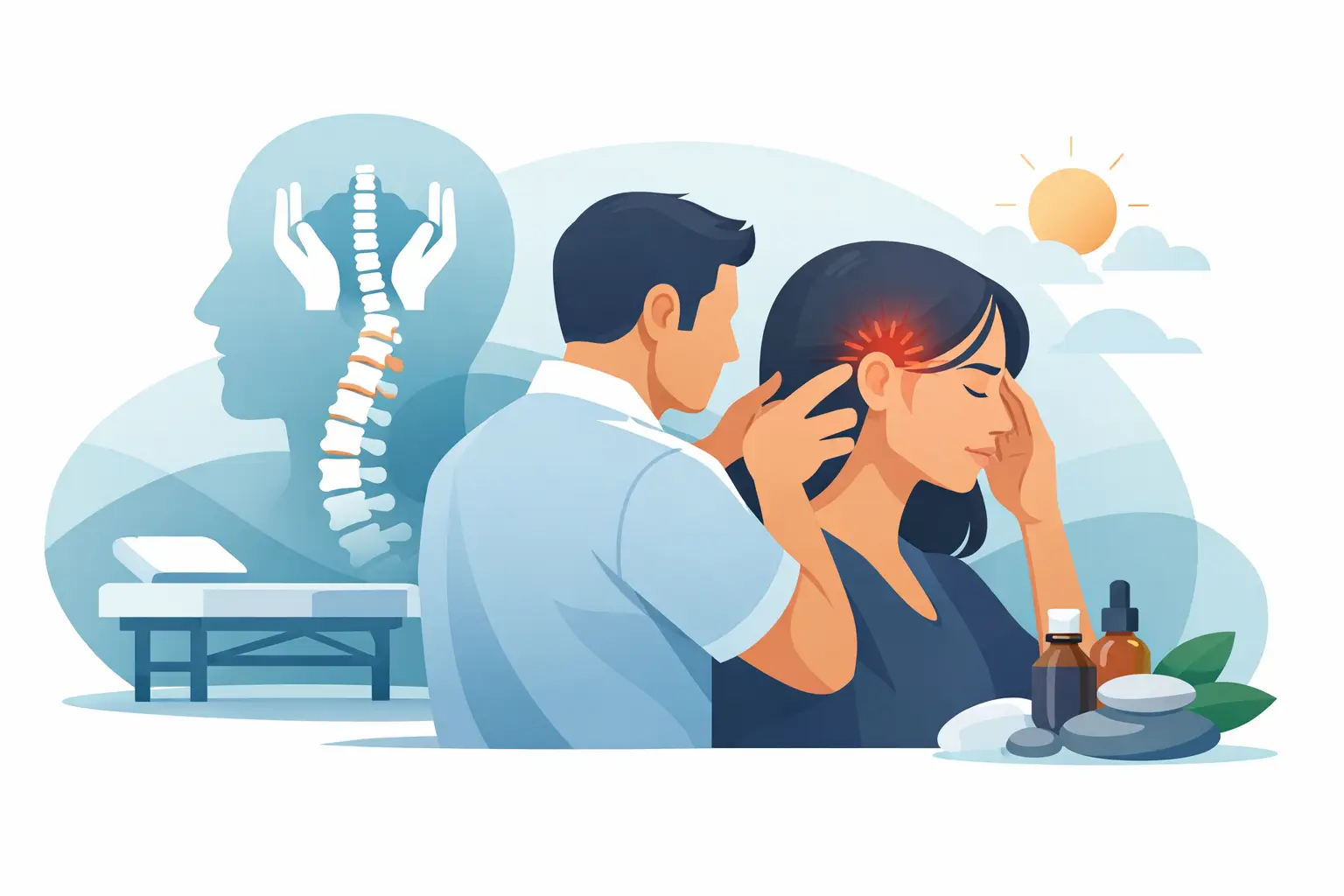
How Chiropractic Care Relieves Headaches Safely
A headache that starts at the base of the skull after a long day at a computer feels different from a sudden, severe headache that appears out of nowhere. That distinction matters. Understanding how chiropractic care relieves headaches starts with identifying whether the neck, jaw, posture, muscle tension, or another issue may be contributing to your pain.
For many people, headaches are not only a head problem. Restricted neck movement, irritated joints, sustained screen posture, tight upper-back muscles, and jaw clenching can all refer pain upward into the head. Chiropractic care may help when these musculoskeletal factors are part of the picture. The goal is practical: reduce the drivers of pain, restore comfortable movement, and give you strategies that fit your work, sleep, and activity routine.
How Chiropractic Care Relieves Headaches
Chiropractors assess the relationship between your spine, muscles, joints, posture, and symptoms. Rather than treating every headache in the same way, a licensed chiropractor will ask about the location, timing, frequency, intensity, and triggers of your headaches. They will also assess neck range of motion, muscle tenderness, joint mobility, posture, and, when appropriate, the jaw and upper back.
When a headache has a neck-related component, treatment may include hands-on joint mobilization or chiropractic adjustments, soft-tissue therapy, guided movement, and advice on posture or daily habits. These approaches can reduce stiffness and improve how the neck and upper back move. For some patients, that means fewer headache triggers and less intensity when a headache does occur.
An adjustment is not the only treatment option, and it is not the right choice for every patient. Your chiropractor should explain the proposed approach, its expected benefits, and any alternatives before treatment begins. Care should always be matched to your health history, comfort level, and goals.
Headaches Most Likely to Have a Neck Component
Cervicogenic headaches
A cervicogenic headache originates from structures in the neck, although the pain is felt in the head or face. It often begins near the upper neck or base of the skull and may travel to one side of the head, behind an eye, or toward the temple. Neck movement, prolonged sitting, driving, or holding one position can aggravate it.
People with cervicogenic headaches may notice reduced ability to turn their head, tenderness in the upper neck, or pain that consistently follows a familiar pattern. Chiropractic treatment can be helpful when joint stiffness, muscle irritation, or poor movement control in the neck is contributing to symptoms. Progress often involves a combination of manual therapy and specific exercises, not passive treatment alone.
Tension-type headaches
Tension-type headaches commonly feel like pressure, tightness, or a band around the head. They are often linked with stress, fatigue, prolonged desk work, poor sleep, and tight muscles around the neck, shoulders, and scalp. The pain may be mild to moderate, but frequent headaches can still interfere with concentration, family time, and exercise.
Chiropractic care may help reduce the musculoskeletal strain involved in tension-type headaches. Treatment can focus on easing tight upper-trapezius, suboccipital, and shoulder muscles, improving mobility through the neck and upper back, and addressing the positions you repeat throughout the day. If your workstation is part of the problem, small changes to monitor height, chair support, keyboard position, or break habits can make a meaningful difference.
Migraine and mixed headache patterns
Migraines are more complex. They can involve throbbing pain, nausea, sensitivity to light or sound, visual disturbances, and changes in energy or mood. A stiff neck is common before or during a migraine, but that does not always mean the neck is the root cause.
Chiropractic care is not a replacement for medical migraine management. However, some people with migraine also have neck pain, postural strain, or tension-type headaches between attacks. Addressing these contributing factors may support comfort and function as part of a broader care plan. Your chiropractor may recommend collaboration with your family physician or another healthcare provider when symptoms suggest migraine, medication review, or further investigation is needed.
What a Headache Assessment Should Include
A careful assessment protects you from generic treatment and helps your provider choose the right path. At your first appointment, expect questions about when your headaches began, what they feel like, how often they happen, and what makes them better or worse. Your chiropractor should also ask about previous injuries, concussions, work demands, sleep, stress, medications, and other health conditions.
The physical assessment may include your neck and upper-back movement, muscle tone, posture, shoulder function, and neurological screening. If jaw pain, clicking, or clenching is involved, TMJ function may also be relevant. Headaches following a motor vehicle collision can require added attention, since whiplash-related neck injury, concussion symptoms, and persistent pain can overlap.
At Royal Oak Physio, Chiro, and Massage Clinic, this assessment can also guide coordinated care when chiropractic treatment is only one piece of the answer. Physiotherapy may help build strength and movement control. Massage therapy may help with muscle tension. Acupuncture, concussion therapy, or TMJ-focused treatment may be considered when they match the findings and your goals.
Treatment Is More Than an Adjustment
Short-term relief matters, especially when headaches are disrupting your life. Long-term improvement usually requires a plan that changes the factors repeatedly provoking symptoms. That may mean improving endurance in the deep neck muscles, restoring upper-back mobility, learning to pace computer work, or adjusting how you train at the gym.
Your treatment plan may include hands-on care, but it should also give you clear actions between visits. For a working professional, that might be a two-minute movement break every hour and a simple neck mobility exercise. For an active person, it may involve modifying training temporarily while rebuilding shoulder and neck control. For someone who clenches their jaw at night, the plan may include jaw relaxation strategies and discussion of appropriate dental or medical support.
There is a trade-off to consider. Passive treatment can feel good quickly, but its effects may not last if the daily load on your neck stays the same. Exercises and habit changes take effort, yet they help build the capacity to tolerate work, driving, sport, and normal life with fewer flare-ups. A good care plan balances both.
When Headaches Need Medical Attention First
Not every headache should be managed as a musculoskeletal problem. Seek urgent medical assessment for a sudden, severe headache that reaches maximum intensity quickly, a headache after significant trauma, or a new headache with fever, confusion, fainting, seizures, chest pain, or a stiff neck.
You should also seek prompt medical attention if a headache comes with new weakness, numbness, trouble speaking, facial drooping, loss of balance, major vision changes, or persistent vomiting. New or changing headaches during pregnancy, after age 50, or in people with cancer, immune suppression, or significant vascular risk factors also deserve medical review. A responsible chiropractor will recognize these warning signs and refer you appropriately.
What Results Can You Expect?
Response to chiropractic care varies. Some patients feel less neck tension and better movement after the first few visits. Others need several weeks of treatment and consistent home exercise before noticing a meaningful change in headache frequency. Long-standing headaches, previous injuries, stress, sleep disruption, and multiple contributing factors can all affect the timeline.
Measurable goals make treatment more useful. Instead of only asking whether the pain is gone, track how many headache days you have each month, how intense they are, how often you take medication, how well you can work or exercise, and how freely you can move your neck. If you are not progressing as expected, your plan should be reassessed rather than simply repeated.
Headaches can make everyday tasks feel much heavier than they should. When neck tension, joint restriction, or posture is contributing, a personalized chiropractic assessment can offer a sensible starting point. The right next step is not to push through the pain or chase a quick fix, but to understand your pattern and choose care that helps you move better and hurt less.