
How to Rehabilitate Hip Replacement Safely
Getting out of bed, climbing stairs, and putting on socks can feel like major milestones after surgery. Knowing how to rehabilitate hip replacement safely helps turn those early, careful movements into the confidence to return to walking, work, hobbies, and daily life.
Recovery is not about pushing through pain or following a generic exercise sheet as quickly as possible. It is about restoring movement, strength, balance, and trust in your new hip at a pace that respects your surgeon’s instructions and your body’s response. A personalized physiotherapy plan can help you move better, hurt less, and avoid the common setbacks that slow recovery.
Start With Your Surgeon’s Instructions
Hip replacement rehabilitation begins with the specific guidance provided by your surgical team. Your weight-bearing status, wound-care instructions, medication plan, and movement precautions always come first. These details can differ based on the type of replacement, the surgical approach used, your overall health, and whether there were complications during or after surgery.
Some patients are asked to follow hip precautions for several weeks. Depending on the approach, these may include avoiding deep bending at the hip, crossing the legs, twisting sharply, or turning the operated leg inward. Other patients may have fewer restrictions and be encouraged to move through a broader range sooner. Do not assume that advice from a friend, family member, or online video applies to your recovery.
Pain and swelling are expected in the early stage, but they should be manageable and gradually improve. Take prescribed medication as directed, use ice if approved by your care team, and give yourself time to rest between activity sessions. More exercise is not always better. A joint that becomes increasingly swollen, hot, or painful after activity may need a smaller workload.
The First Days: Move Early, Move Carefully
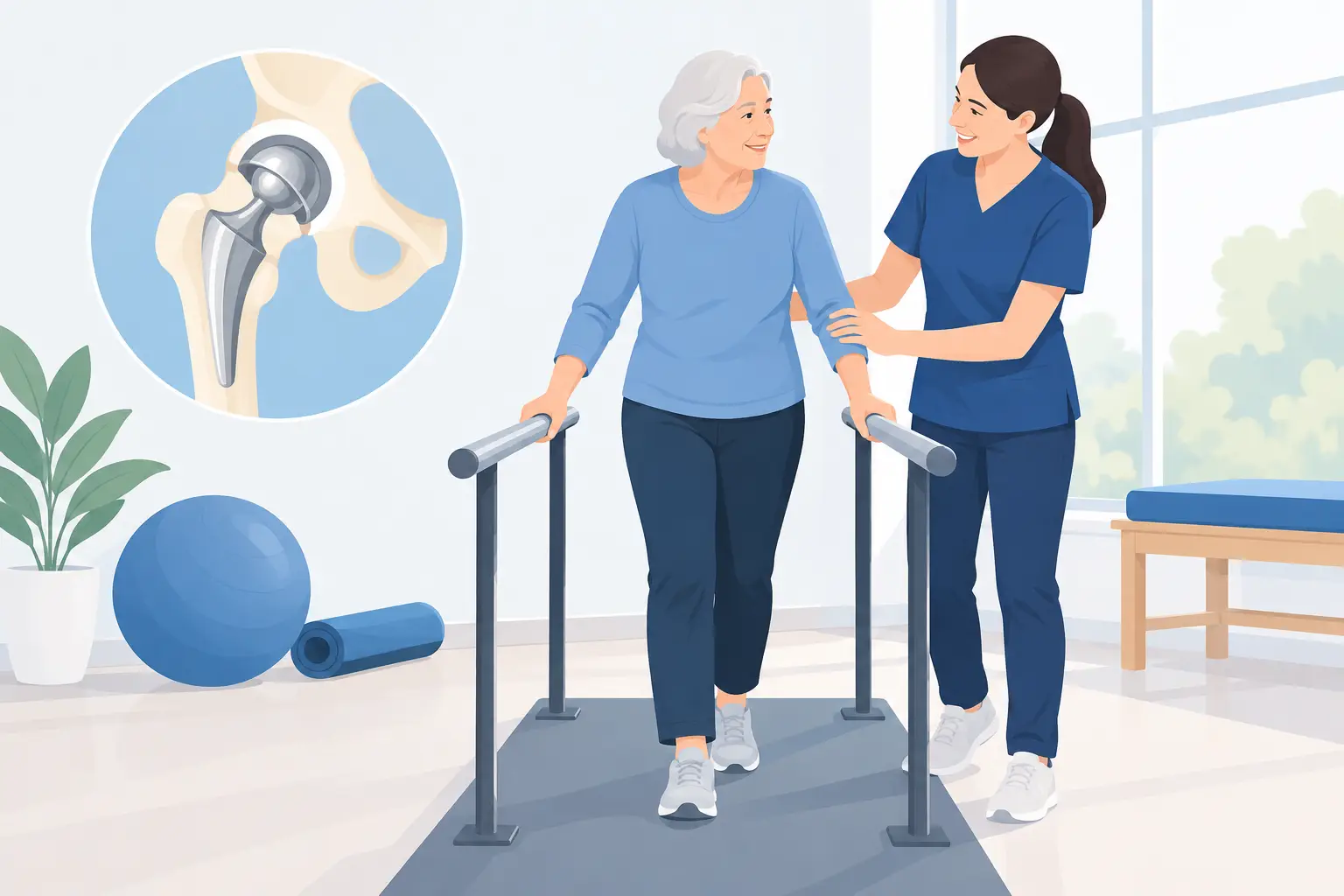
Most people begin standing and walking with support shortly after surgery, often with a walker. These first walks may be brief, but they are meaningful. They help circulation, reduce stiffness, rebuild confidence, and teach you how to move safely with your new hip.
Your early focus is practical: getting in and out of bed, sitting and standing from an appropriate chair, using the bathroom safely, and walking short distances with the prescribed mobility aid. A walker or crutches are not a sign of failure. They are tools that allow you to walk with better control while your hip muscles recover.
Simple exercises are often introduced right away. These may include ankle pumps, gentle thigh squeezes, buttock squeezes, and carefully guided heel slides. The goal is to maintain circulation and begin waking up the muscles around the hip without stressing healing tissues. Your physiotherapist can check your technique and adjust the exercises if pain, stiffness, or weakness is limiting your progress.
How to Rehabilitate Hip Replacement Week by Week
Recovery timelines vary, but most rehabilitation follows a gradual progression rather than a sudden return to normal activity.
Weeks 1 to 2: Protect Healing and Build a Routine
During the first two weeks, swelling, fatigue, and disrupted sleep are common. Your priorities are safe walking, regular short movement sessions, wound healing, and managing discomfort. It is usually better to take several short walks through the day than one long walk that leaves you sore and exhausted.
Practice transfers carefully. Use armrests when standing from a chair, avoid low or soft seating unless your care team has approved it, and keep commonly used items within easy reach at home. If stairs are necessary, make sure you understand the sequence recommended by your physiotherapist before attempting them independently.
Weeks 3 to 6: Restore Strength and Walking Quality
As pain and swelling settle, the work shifts toward improving hip strength, range of motion, and walking mechanics. Many people transition from a walker to a cane during this period, but only when they can walk without significant limping or loss of balance.
This is where rehabilitation becomes more individualized. A person returning to a desk job may need help with prolonged sitting, commuting, and safe pacing through the workday. Someone who enjoys walking trails, golf, or fitness classes will need a progressive plan that prepares the hip for those specific demands.
Exercises may progress to standing hip movements, sit-to-stands, supported balance work, gentle stationary cycling, and controlled step exercises. The exact exercise selection matters less than doing it with good form and appropriate resistance. Repeated limping, hiking the hip, or twisting through the pelvis can reinforce poor movement habits and irritate surrounding tissues.
Weeks 6 to 12: Return to Everyday Function
By this stage, many patients are walking more comfortably, completing household tasks, and returning to more regular routines. However, strength and endurance often lag behind pain relief. It is common to feel relatively good at rest but notice fatigue, weakness, or stiffness after longer walks, errands, or standing for extended periods.
Physiotherapy can progress toward single-leg balance, functional strengthening, stair control, improved gait, and activities that match your goals. Your therapist may also assess your lower back, knees, feet, and core. These areas influence how force moves through the hip, and addressing them can reduce compensatory pain as you become more active.
Beyond Three Months: Build Capacity for the Life You Want
A new hip can reduce joint pain, but surgery alone does not automatically restore fitness, balance, or muscle strength. Continued strengthening helps support the joint and makes real-world activities easier, from carrying groceries to walking on uneven ground.
Low-impact activities are commonly recommended, including walking, cycling, swimming once the incision is fully healed and approved, and strength training adapted to your abilities. Higher-impact activities may or may not be appropriate depending on your surgeon’s advice, implant type, experience level, and overall joint health. This is an area where individual guidance matters.
Do Not Let a Limp Become Your New Normal
A limp after hip replacement is often linked to weakness in the hip muscles, especially the muscles that stabilize the pelvis while standing on one leg. It can also be related to pain, stiffness, leg-length perception, or fear of loading the operated side.
Trying to “walk it off” without correcting the cause can create secondary issues in the back, opposite hip, knee, or foot. A physiotherapist can assess your walking pattern, determine whether your mobility aid is still needed, and prescribe targeted exercises to improve hip control. The goal is not simply to walk farther. It is to walk well.
Watch for Signs You Need Medical Attention
Contact your surgeon or seek urgent medical care if you experience symptoms that could indicate a complication. These include:
- Increasing redness, drainage, fever, or worsening pain around the incision
- Sudden severe hip or leg pain, a fall, or inability to bear weight
- Calf pain, significant one-sided swelling, chest pain, or shortness of breath
- New numbness, weakness, or a hip that appears to shift or dislocate
A slower-than-expected recovery does not always mean something is wrong, but worsening symptoms should not be ignored. Early assessment can protect your recovery and provide reassurance when concerns are normal.
Why Physiotherapy Makes a Difference
A good hip replacement rehabilitation plan is more than a set of exercises. It includes assessment, hands-on guidance when appropriate, education about pacing, and measurable progression based on how you move in daily life.
At Royal Oak Physio, a licensed physiotherapist can help you rebuild mobility after surgery with a plan that fits your goals, home environment, and current ability. If muscle tightness, back discomfort, balance concerns, or other issues are affecting your progress, coordinated care can address the full picture rather than chasing symptoms one at a time.
Your recovery does not need to look exactly like anyone else’s. Keep your follow-up appointments, respect the healing process, and focus on small improvements that add up: a smoother walk, less help on the stairs, a longer outing without fatigue. Those are the practical gains that bring life back within reach.