
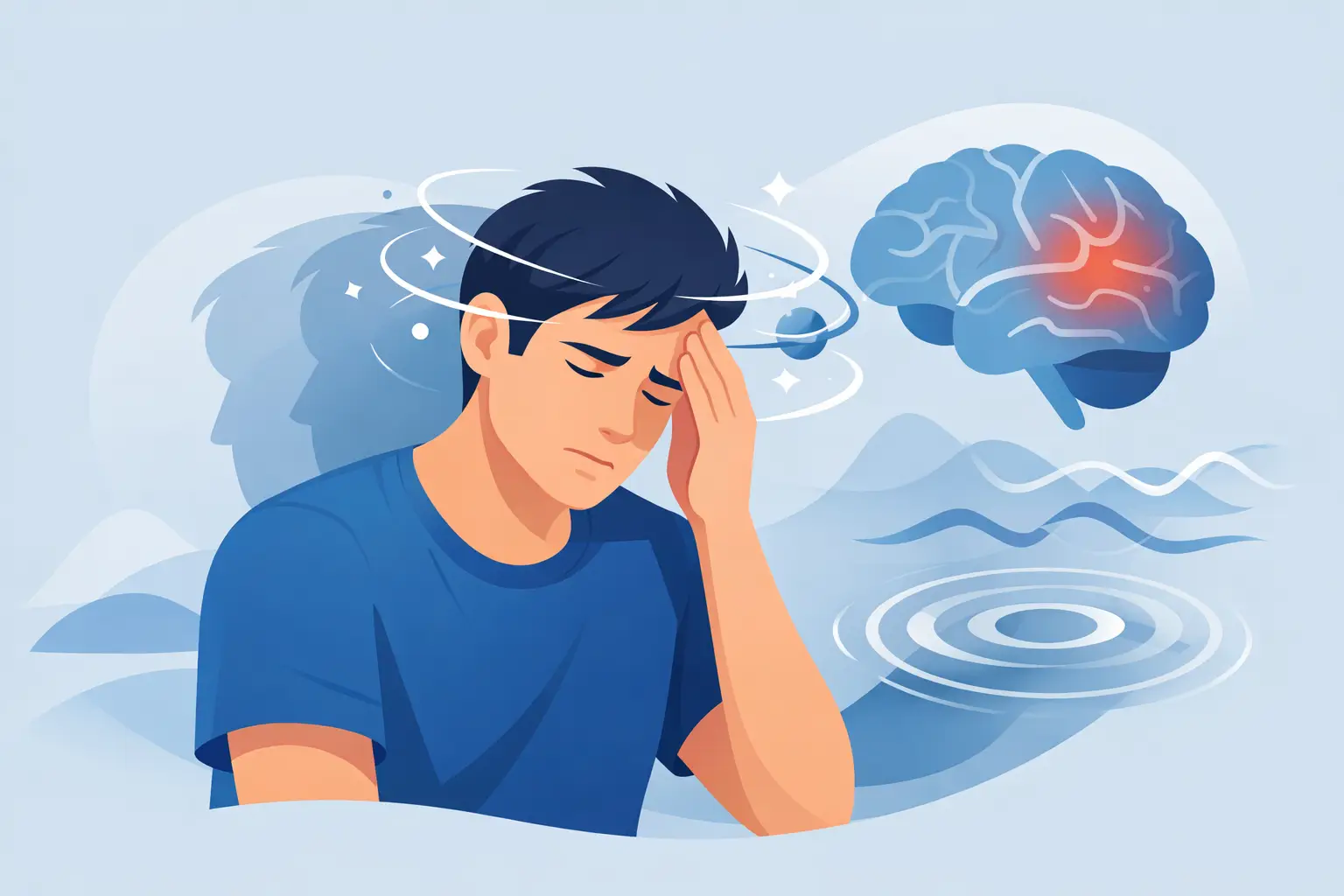
What Causes Dizziness After Concussion?
The room feels off, your balance is shaky, and quick head turns suddenly make everything worse. If you are wondering what causes dizziness after concussion, you are not alone. Dizziness is one of the most common symptoms after a concussion, and it can linger longer than people expect, especially when the real source has not been identified.
A lot of patients are told to rest and wait. Sometimes that helps. Sometimes it does not. The reason is simple – dizziness after a concussion is not one single problem. It can come from the inner ear, the eyes, the neck, the brain’s processing systems, or a mix of several issues at once. Getting the right answer matters because treatment depends on the cause.
What causes dizziness after concussion most often?
After a concussion, the brain and body can have trouble coordinating the systems that keep you steady and oriented. Those systems include your vestibular system in the inner ear, your vision, your neck, and your brain’s ability to process sensory input. When one or more of these systems is disrupted, dizziness can show up in different ways.
Some people feel lightheaded. Others feel like they are swaying, floating, or spinning. Some feel dizzy only when they stand up, walk in busy places, look at screens, or turn their head quickly. Those details are not minor. They are often the clues that point to the real driver of symptoms.
Vestibular dysfunction
One of the most common reasons for dizziness after concussion is vestibular dysfunction. The vestibular system helps your brain understand head movement and position. If this system is irritated or not processing information properly after a head injury, you may feel unsteady, off balance, or motion-sensitive.
This often shows up during simple daily tasks. Walking through a grocery store, scrolling on a phone, or getting up too quickly can suddenly feel uncomfortable. Some patients describe it as feeling drunk without having had anything to drink.
Benign paroxysmal positional vertigo
A concussion can also trigger benign paroxysmal positional vertigo, often called BPPV. This happens when tiny crystals in the inner ear get displaced and move into the wrong canal. The result is a brief but intense spinning sensation, usually triggered by rolling in bed, looking up, or bending forward.
BPPV is one of the more treatable causes of dizziness, but it needs to be recognized properly. General rest will not fix it. Specific repositioning treatment is usually required.
Visual and oculomotor problems
Your eyes and vestibular system work together. After a concussion, that teamwork can break down. The eyes may struggle to track movement, shift focus, or work together properly. When that happens, dizziness can show up with reading, computer use, driving, or being in visually busy environments.
This is one reason some people say they feel worse at work, in bright stores, or while using multiple screens. It is not always the brain alone. Sometimes the issue is how the visual system is coordinating with balance and motion.
Neck-related dizziness
The neck is often overlooked after concussion, especially if the injury happened in a fall, sports collision, or motor vehicle accident. But the cervical spine contains joints, muscles, and nerves that help your brain understand where your head is in space. If the neck is stiff, injured, or not moving well, it can contribute to dizziness.
This type of dizziness often comes with neck pain, tension headaches, or symptoms that worsen with certain head positions. It may not feel exactly like spinning. More often, it feels like imbalance, fogginess, or a vague sense that something is off.
Autonomic nervous system changes
Some people feel dizzy because concussion affects how the body regulates blood pressure, heart rate, and exertion. This can lead to symptoms when standing up, climbing stairs, exercising, or even after a busy day. You may feel faint, weak, or suddenly overwhelmed.
This is where recovery can get frustrating. A person may think they are improving, then feel dizzy again as soon as they try to return to normal activity. In these cases, the problem is not just movement. It may be the body’s response to exertion.
Why dizziness can last longer than expected
A mild concussion does not always mean mild recovery. Dizziness can continue when the original issue has not been assessed properly, when several systems are involved, or when patients stop moving too much because symptoms feel unpredictable.
There is a balance here. Pushing too hard too soon can make symptoms worse. But complete rest for too long can also slow progress. That is why a targeted assessment matters. The goal is to figure out what is driving the dizziness and build treatment around that, rather than using a one-size-fits-all approach.
What causes dizziness after concussion in different situations?
The pattern of symptoms often tells us a lot. If dizziness happens when rolling in bed or looking up, BPPV may be part of the issue. If it shows up with reading, scrolling, or fluorescent lights, vision and vestibular coordination may need attention. If it comes with neck stiffness or headaches, the cervical spine may be contributing. If standing up or exertion brings it on, autonomic regulation may be involved.
That is also why self-diagnosing can be risky. Two people can both say, “I feel dizzy after my concussion,” and need completely different treatment plans.
When dizziness after concussion should be assessed sooner
Some dizziness improves in the first days to weeks after injury. But if symptoms are persisting, getting worse, or interfering with work, school, driving, or exercise, it is worth getting assessed. The same goes if nausea, balance problems, visual symptoms, or neck pain are sticking around.
You should also seek urgent medical attention if dizziness comes with red flag symptoms such as worsening severe headache, repeated vomiting, slurred speech, weakness, seizure, or significant confusion. A concussion should always be taken seriously, especially when symptoms change suddenly.
How treatment depends on the cause
This is where many patients start to make real progress. Dizziness after concussion often responds well to treatment, but the treatment has to match the source.
If the issue is BPPV, repositioning manoeuvres may be used to move the crystals back where they belong. If vestibular dysfunction is driving symptoms, vestibular rehabilitation can help retrain balance, motion tolerance, and head-eye coordination. If visual tracking is part of the problem, specific oculomotor exercises may be recommended. If the neck is involved, hands-on treatment and targeted exercises may improve both pain and dizziness. If exertion or standing tolerance is an issue, a graded return-to-activity plan may be needed.
This is also where integrated care can make a difference. At a clinic like Royal Oak Physio, Chiro, and Massage Clinic, assessment can look at more than one possible cause instead of assuming every dizzy patient needs the same advice.
What a proper assessment should include
A useful concussion-related dizziness assessment should not stop at asking whether you feel dizzy. It should explore when it happens, what triggers it, how long it lasts, and what other symptoms travel with it.
That may include balance testing, vestibular screening, eye movement assessment, cervical spine evaluation, and a review of your symptom history and activity tolerance. In some cases, referral back to a physician or additional medical evaluation may be appropriate. Honest care means recognizing both what can be treated in rehab and what needs further medical review.
Recovery is rarely linear
One of the hardest parts of concussion recovery is that symptoms can fluctuate. A good day does not always mean you are fully recovered, and a bad day does not always mean you are back at square one. Sleep, stress, screen time, neck strain, and activity level can all affect how dizziness shows up.
That is why treatment should be practical and realistic. Patients need a plan they can follow in real life, not just generic advice to rest more. For a working adult, that may mean strategies for tolerating computer use. For an active person, it may mean a gradual return to exercise. For someone recovering after a car accident, it may mean addressing both the concussion and the neck injury together.
If you are still asking what causes dizziness after concussion, the most honest answer is that it depends on which system was disrupted and how your body is responding now. The good news is that dizziness is not something you should simply have to put up with. With the right assessment, the cause often becomes clearer, and the path forward becomes much more manageable.
If your recovery feels stalled, trust that there is value in looking closer. The right treatment plan can help you move with more confidence, feel steadier day to day, and get back to the parts of life that still feel out of reach.