
Can Physiotherapy Help Knee Arthritis Pain?
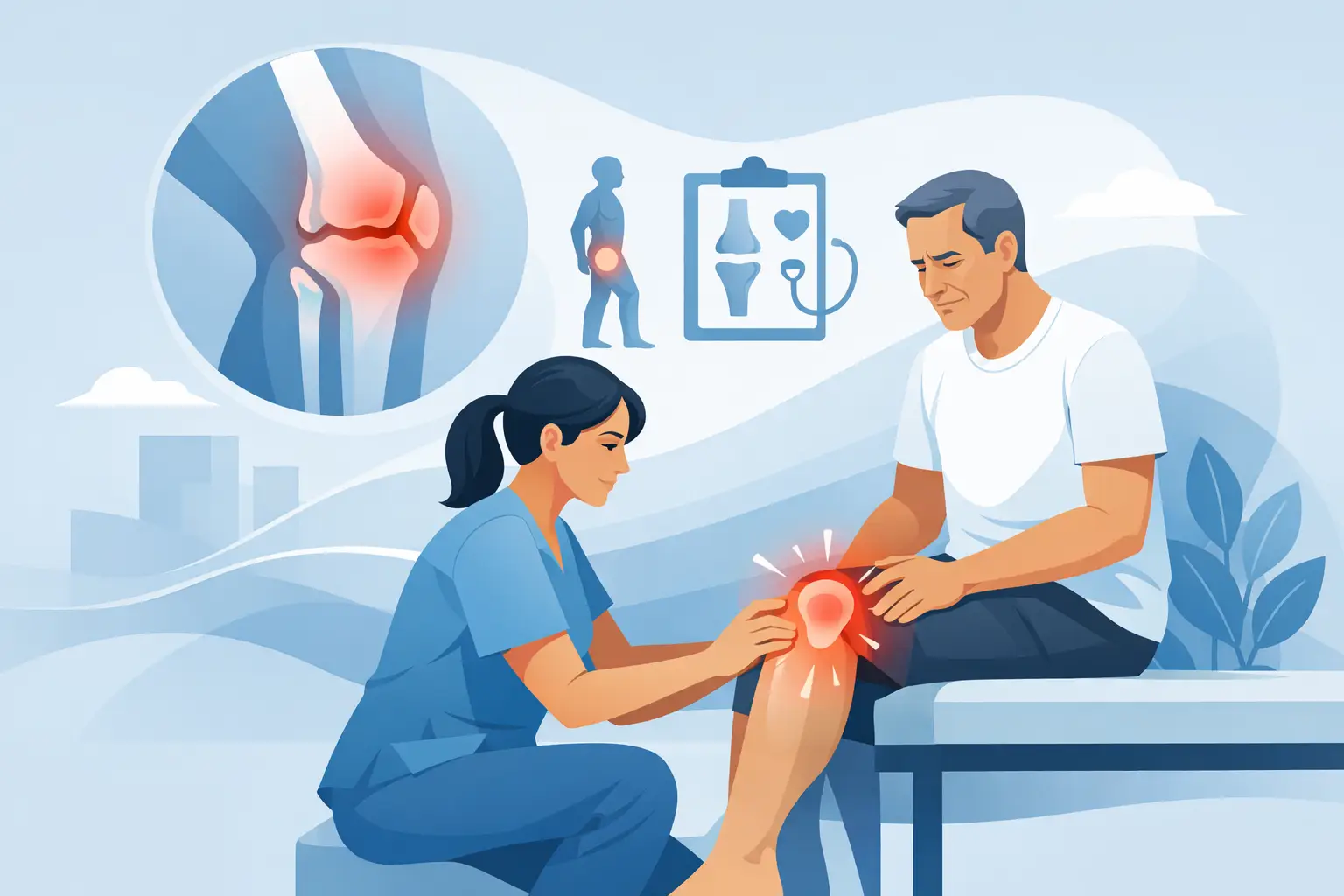
Knee arthritis can make ordinary parts of the day feel like a calculation: Which stairs can I avoid? Can I finish a grocery trip? Will getting up from the couch hurt again? If you are asking, “can physiotherapy help knee arthritis?”, the practical answer is yes. Physiotherapy cannot reverse worn cartilage, but it can often reduce pain, improve strength and movement, and help you stay active with more confidence.
For many people, the goal is not to make the knee feel perfect every day. It is to walk, work, exercise, sleep, and keep up with family without arthritis setting the limits. A licensed physiotherapist can help build a plan around those real-life goals.
Can Physiotherapy Help Knee Arthritis? What It Can Do
Knee osteoarthritis is the most common form of knee arthritis. It develops when changes in the joint, including cartilage wear and irritation of surrounding tissues, affect how the knee moves and tolerates load. Pain may be felt during walking, squatting, climbing stairs, standing after sitting, or after a more active day. Stiffness, swelling, clicking, and a sense that the knee is unreliable are also common.
Physiotherapy addresses the factors around the joint that can make these symptoms worse. The knee does not work alone. Hip strength, ankle mobility, balance, walking patterns, previous injuries, body weight, work demands, and activity habits all influence how much force the knee manages.
A well-designed program may help you:
- improve the strength of the quadriceps, hamstrings, hips, and calves
- increase knee movement when stiffness is limiting daily tasks
- improve balance and confidence on uneven ground or stairs
- find activities and exercise levels that build capacity without repeated flare-ups
- use simple strategies for managing pain during work, recreation, and recovery
Results vary. Arthritis severity, general health, past knee injuries, and consistency with the plan all matter. Still, exercise-based physiotherapy is one of the most useful conservative treatments for many people with knee osteoarthritis.
Why Stronger Muscles Can Mean Less Knee Pain
It may seem counterintuitive to exercise a painful knee. Many people rest completely after a flare-up because they are worried they are causing more damage. Short periods of relative rest can be sensible when symptoms are high, but avoiding movement for too long often leads to weaker muscles and more stiffness. That can make daily movement harder when you try to return to it.
Your thigh muscles help control bending and straightening at the knee. Your hip muscles help control the position of your leg during walking, stair climbing, and getting out of a chair. When those muscles are stronger and better coordinated, the knee may move more efficiently and tolerate everyday loads more comfortably.
The right exercise should be challenging enough to create progress, not so aggressive that it causes a major flare-up. Some mild discomfort during or after exercise can be normal. Pain that becomes sharp, significant swelling, limping that worsens, or symptoms that stay elevated for more than a day or two may mean the activity needs to be adjusted.
A Plan Should Fit Your Starting Point
There is no single “best” knee arthritis exercise for everyone. Someone who has difficulty standing from a chair needs a different starting point than someone who can hike but develops pain downhill. A physiotherapist may begin with controlled strengthening, gentle range-of-motion work, cycling, walking, or pool exercise, then progress the plan as your capacity improves.
The most effective plan is usually one you can repeat consistently. Ten to 20 minutes of purposeful exercise several times a week is often more valuable than an ambitious program that is impossible to maintain.
What Happens During Physiotherapy for Knee Arthritis?
Your first appointment should start with a thorough assessment, not a generic sheet of exercises. Your physiotherapist will ask about where and when the knee hurts, how symptoms affect work and home life, previous injuries or surgeries, medications, activity levels, and goals.
They will also assess how you walk, squat, climb stairs, balance, and move through the hip, knee, and ankle. This helps identify whether weakness, stiffness, poor load tolerance, or a movement habit may be contributing to your symptoms.
Treatment may include hands-on techniques to help improve mobility or reduce muscle tension, but these are usually one part of the plan rather than the whole solution. The lasting work comes from progressively rebuilding strength and confidence in movement. Your therapist may also discuss heat or ice for symptom relief, taping or bracing when appropriate, footwear considerations, and ways to pace demanding tasks.
At Royal Oak Physio, Chiro, and Massage Clinic, care can be coordinated with other licensed practitioners when that adds value. For example, massage therapy may help address surrounding muscle tension, while orthotics may be considered when foot mechanics are affecting comfort during walking. These options are not replacements for active rehabilitation, but they can support a broader, personalized treatment plan.
Pacing Activity Without Giving Up What You Enjoy
Knee arthritis responds poorly to two extremes: doing far too much on a good day, then avoiding activity for a week, or becoming so cautious that strength steadily declines. Pacing is the middle ground. It means spreading demanding activities across the week and increasing them gradually.
If a long walk reliably causes a flare-up, the answer is not always to stop walking. You may start with shorter, more frequent walks on flatter ground, include rest breaks, and build distance over time. If stairs are difficult, strengthening and practising the movement in a controlled setting can make them less intimidating.
Some activities are often easier on arthritic knees than high-impact exercise. Cycling, swimming, water walking, and strength training are common options. But preference matters. The best movement is one that fits your routine and feels worthwhile enough to continue.
Weight, Work, and Real-Life Demands
For people carrying extra body weight, even modest weight loss can reduce stress through the knee during daily movement. This is not about blame. Knee arthritis is influenced by age, genetics, previous injury, occupation, and many other factors. It is about identifying practical opportunities that may help reduce symptoms.
Work also matters. A job involving kneeling, lifting, prolonged standing, or frequent stairs may require specific strategies. Your physiotherapist can help you modify positions, plan recovery breaks, and build the strength needed for those demands instead of offering advice that only works in a clinic.
When Physiotherapy May Need to Be Part of a Bigger Plan
Physiotherapy is valuable, but it is not the only option. Some people benefit from medication guidance through their physician, injections, or a referral to an orthopaedic specialist. If arthritis is advanced and pain remains severe despite a well-followed conservative plan, joint replacement may be worth discussing with your health-care team.
Physiotherapy can still be useful before and after surgery. Building strength and improving movement before a procedure may support recovery, while post-operative rehabilitation helps restore mobility, walking ability, and confidence.
Seek prompt medical assessment for a hot, red, markedly swollen knee, fever, sudden inability to bear weight, a major new injury, calf swelling, or unexplained worsening pain. These symptoms may not be routine arthritis and should not be managed with home exercise alone.
The Measure of Progress Is Function
Knee arthritis can fluctuate. A painful week does not mean you have failed, and a good day does not mean you need to push through everything at once. Progress is often measured in practical changes: getting out of a chair with less effort, walking farther, returning to a favourite class, or reaching the end of a workday with less pain.
The right physiotherapy plan gives you more than passive treatment. It gives you a clear way to respond when symptoms change and the tools to keep moving forward. If knee pain is making your world smaller, an assessment can be a sensible first step toward moving better and hurting less.