
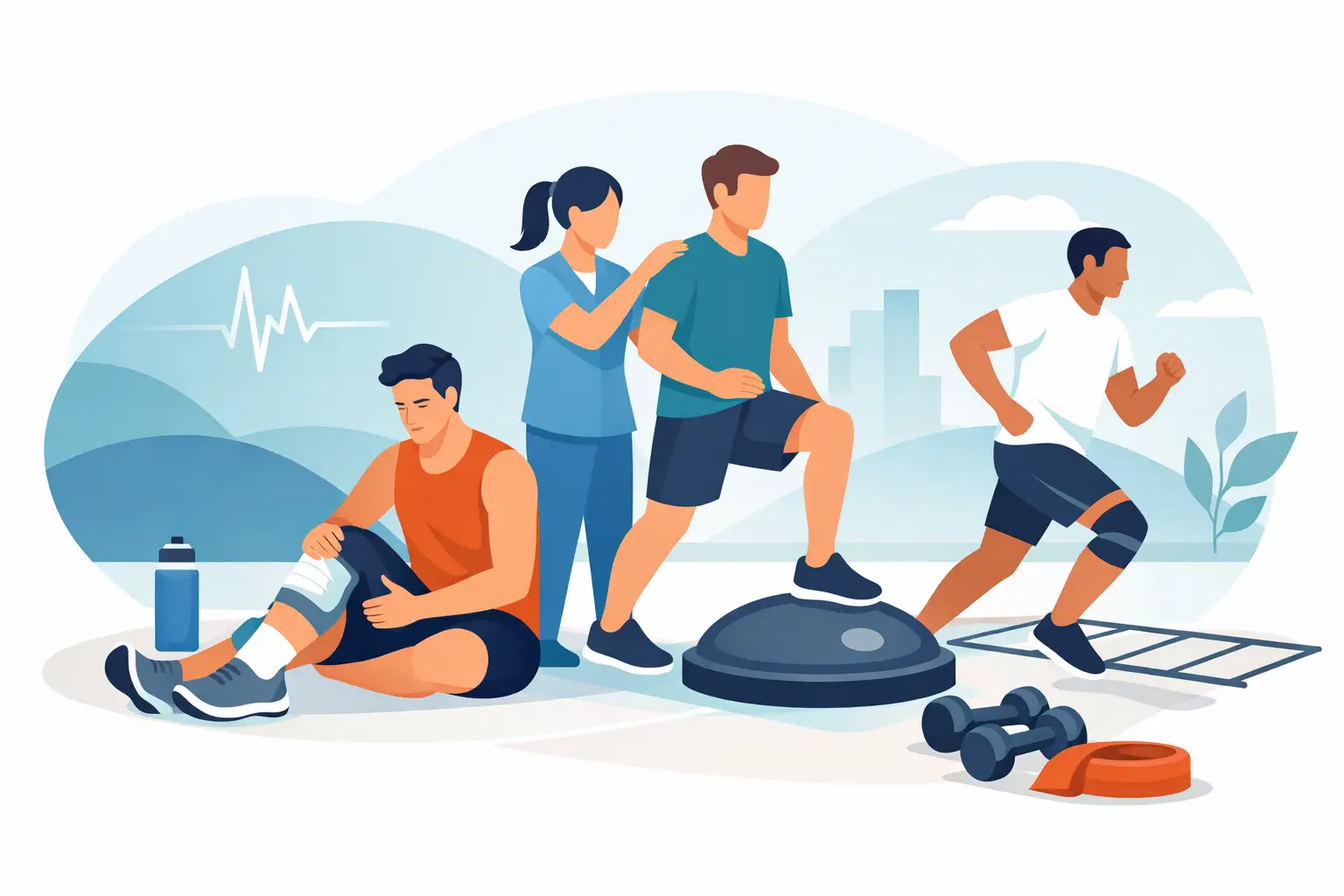
Sports Injury Rehabilitation That Works
A rolled ankle during a weekend soccer game can change your whole week. A sore shoulder from hockey can linger for months if it is handled the wrong way. Sports injury rehabilitation is not just about getting pain down. It is about helping your body recover properly so you can move well, train confidently, and lower the chance of the same problem coming back.
For many people, the hardest part is not the injury itself. It is the gap between resting enough to heal and doing enough to avoid stiffness, weakness, and compensation. That is where a clear treatment plan matters. Good rehab gives you direction, measurable progress, and support from licensed professionals who understand both the injury and the demands of your sport or activity.
What sports injury rehabilitation actually involves
Sports injury rehabilitation is a structured recovery process after damage to a muscle, tendon, ligament, joint, or bone related to physical activity. That may mean an acute injury, like an ankle sprain or pulled hamstring, or an overuse problem, like runner’s knee, tennis elbow, or rotator cuff irritation.
The goal is not simply to make the pain tolerable. The goal is to restore movement, strength, control, endurance, and confidence so that your return to sport makes sense for your body. In many cases, that also means identifying why the injury happened in the first place. If a patient returns to running with the same mobility restrictions, strength deficits, or training errors, the problem often returns too.
This is why effective rehabilitation usually includes more than one approach. Hands-on treatment may help reduce pain and improve joint or soft tissue mobility. Targeted exercise rebuilds strength and stability. Movement retraining helps correct mechanics. Education helps you understand what to do between appointments, which matters just as much as what happens in the clinic.
Why rest alone is rarely enough
Rest has a role, especially early on when tissues are irritated or healing after a more significant injury. But rest by itself is often incomplete care. If you stop all activity for too long, the injured area may become weaker, surrounding tissues may tighten, and your body may start moving around the problem instead of through it.
That compensation is one reason small injuries turn into bigger ones. A painful knee can change how you load your hip and ankle. A shoulder issue can alter neck tension and upper back mechanics. A calf strain can affect stride length and place extra stress elsewhere. Patients often assume the pain site is the whole story, but the body rarely works that way.
A guided rehab plan helps you stay active within safe limits. That might mean modifying your sport, replacing impact work with lower-load exercise for a period, or progressing through specific drills rather than jumping straight back into competition. The pace depends on the tissue involved, the severity of the injury, and your goals.
The stages of sports injury rehabilitation
Most sports injuries do not recover in a straight line, but rehabilitation generally follows a few clear phases.
Early stage: calm things down without shutting everything down
At the beginning, the focus is often pain control, swelling management, and protecting the injured area while keeping the rest of the body moving. This may include manual therapy, gentle mobility work, taping, modified activity, and simple exercises that maintain circulation and basic control.
This phase is where many people either do too much too soon or too little for too long. Both can slow recovery. The right plan finds the middle ground.
Middle stage: restore movement and build strength
Once pain and irritation settle, the work becomes more active. This stage often includes progressive strengthening, balance work, mobility exercises, and retraining for the patterns your sport demands.
For example, an athlete recovering from an ankle sprain may need more than ankle exercises. They may also need single-leg stability work, calf strength, landing control, and direction-change drills. A patient with shoulder pain may need thoracic mobility, rotator cuff strength, scapular control, and gradual overhead loading.
Late stage: prepare for real-world performance
This is the stage many people skip. They feel better, so they go back to full activity before the body is ready for full demand. Pain may be lower, but if speed, endurance, impact tolerance, and coordination have not been rebuilt, the return is often short-lived.
Late-stage rehab should reflect your actual activity. That may include jumping, cutting, sprinting, lifting, skating, throwing, or sport-specific conditioning. The goal is to bridge the gap between the treatment room and the real movements that matter to you.
When a multidisciplinary approach helps
Not every sports injury needs multiple providers, but many patients benefit from coordinated care. A physiotherapist may lead the assessment, exercise progression, and return-to-sport planning. Chiropractic care may help with joint mobility or related spinal and extremity mechanics. Massage therapy can reduce soft tissue tension and support recovery when muscles are overloaded. Acupuncture may be useful for pain relief in some cases.
The benefit of a multidisciplinary clinic is not that every patient needs every service. It is that your care can be adjusted based on how you respond. If one approach helps but progress stalls, your treatment plan does not have to start over somewhere else. It can evolve.
That matters for patients with more complex cases, including recurrent sprains, tendon problems, post-concussion symptoms, TMJ issues affecting athletes, or injuries layered on top of older movement restrictions. Coordinated care often makes the process more practical and more efficient.
Common injuries that respond well to sports injury rehabilitation
Some of the most common cases seen in clinic include ankle sprains, knee ligament sprains, patellofemoral pain, Achilles tendinopathy, shin splints, hamstring strains, low back pain related to lifting or rotational sport, rotator cuff injuries, tennis or golfer’s elbow, and neck strains after contact or repetitive loading.
The timeline for improvement varies. A mild strain may respond quickly. A tendon issue or recurrent shoulder problem may take longer and require more patience. This is where honest treatment planning matters. Quick relief is helpful, but lasting improvement usually comes from consistent progression, not shortcuts.
What a good rehab plan should feel like
Patients often ask how they know if treatment is working. The answer is not always zero pain right away. Early progress may look like better range of motion, less morning stiffness, improved balance, easier walking, or being able to train in a modified way without flare-ups.
A good rehab plan should feel clear. You should understand what is injured, what the treatment is trying to change, what you should do at home, and what progress markers matter. You should also know what to avoid for now and why.
It should feel personalized. Two people with the same diagnosis may need very different plans depending on age, training level, work demands, previous injuries, and timeline goals. A hockey player returning to competition, a recreational runner, and an adult trying to keep up with weekend activities do not always need the same progression.
Most importantly, it should feel realistic. If your program does not fit your schedule, equipment access, or pain tolerance, it is less likely to be followed. Practical care gets better results than idealized plans that do not match real life.
Sports injury rehabilitation and return to sport
Returning to sport is not a single moment. It is a progression. First, you return to basic daily movement. Then you return to training in a modified way. Then you return to more demanding drills, and finally to full participation.
This process should be based on function, not just time. Some tissues need a certain healing window, but calendar-based decisions alone can be misleading. If strength is still reduced, coordination is off, or impact tolerance is poor, the risk of re-injury stays higher even if enough weeks have passed.
That is why reassessment matters. Your provider should be tracking how your body responds and adjusting the plan accordingly. Some patients move faster than expected. Others need more time because life, work, sleep, stress, or training history affects recovery. There is nothing unusual about that.
For active adults in northwest Calgary, access to integrated care can make this process much easier. When treatment, exercise progression, and symptom management happen under one roof, there is less guesswork and less delay between phases of care.
When to seek help
If pain is persistent, swelling is significant, movement feels limited, strength is dropping, or you keep re-injuring the same area, it is worth getting assessed. The same applies if you have stopped doing an activity you enjoy because something never fully settled.
Early treatment does not guarantee a quick fix, but it often prevents a minor issue from becoming a longer one. It can also reduce the frustration of trial-and-error rest, internet advice, and returning too soon because the pain seemed manageable for a day or two.
At Royal Oak Physio, Chiro, and Massage Clinic, sports injury care is built around that idea – assess properly, treat the cause, and give patients a practical plan they can actually follow.
If you are dealing with a sports injury, the right next step is not to wait for perfect timing. It is to start with a clear assessment, get a plan that fits your goals, and begin rebuilding from there.