
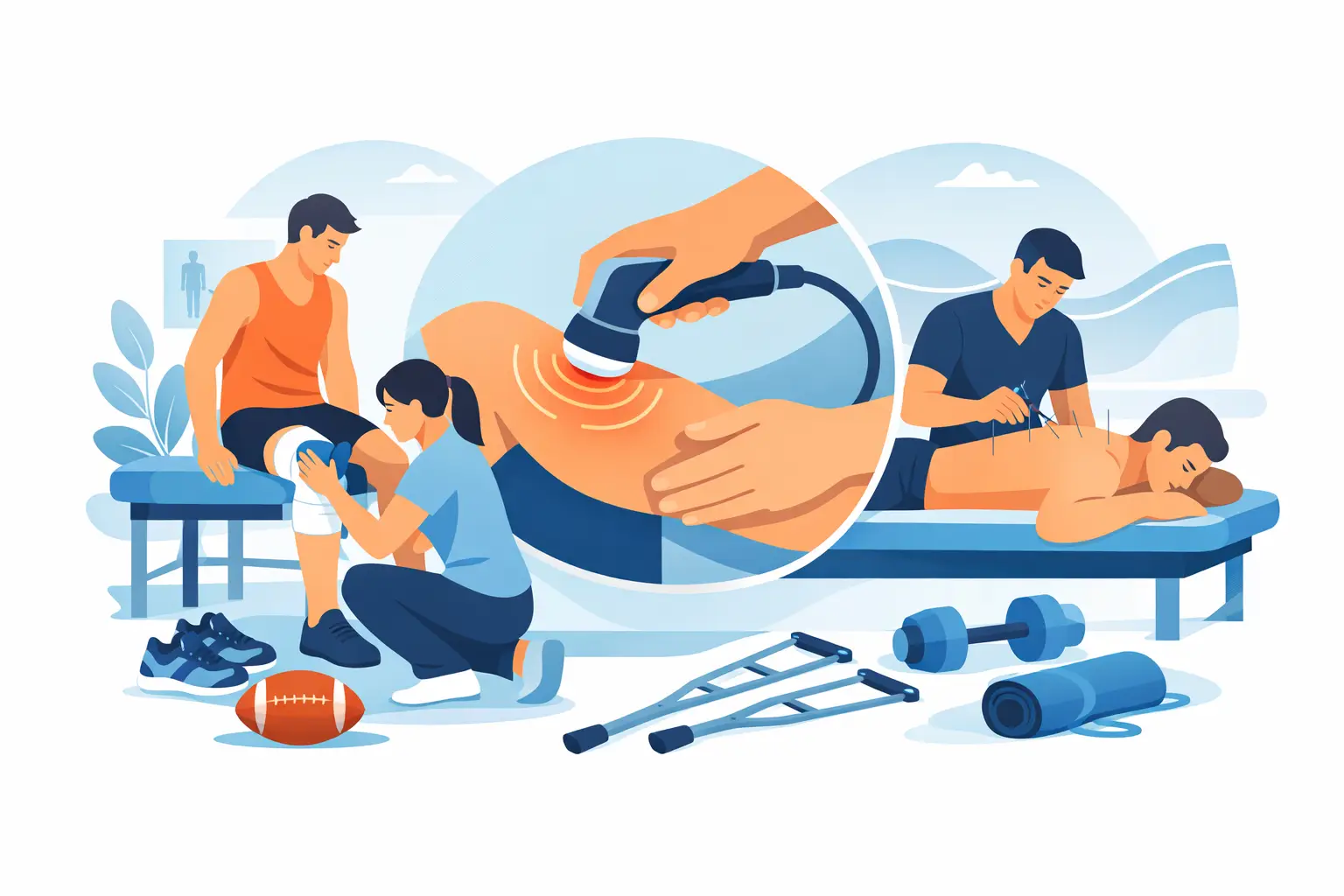
Top Therapies for Sports Injuries That Work
That sharp calf pull in a weekend soccer match, the shoulder pain that lingers after volleyball, the knee that never quite settles after a run – sports injuries rarely affect just one body part or one training session. The top therapies for sports injuries are the ones that match the injury, the stage of healing, and the person behind it. Good treatment is not about chasing the newest trend. It is about reducing pain, restoring movement, and helping you return to activity with a lower risk of re-injury.
For some people, that means hands-on treatment and exercise-based rehab. For others, it means combining physiotherapy with massage therapy, chiropractic care, acupuncture, or shockwave therapy. The right answer depends on what tissue is injured, how long the problem has been present, and what your goals look like in real life.
What makes the top therapies for sports injuries effective?
The most effective treatment plans do three things well. First, they calm pain and irritation enough to let you move. Second, they rebuild strength, control, and tolerance so the injured area can handle load again. Third, they address the reasons the injury developed in the first place, whether that is training volume, mobility limits, technique, weakness, or poor recovery.
This is why one-size-fits-all care often falls short. A fresh ankle sprain does not need the same approach as chronic tennis elbow. A runner with recurring shin pain may need different treatment than a hockey player recovering from a hip strain. The best outcomes usually come from a proper assessment followed by a treatment plan that changes as you improve.
Physiotherapy is often the foundation
Physiotherapy is one of the top therapies for sports injuries because it combines assessment, pain management, movement retraining, and progressive exercise. A licensed physiotherapist looks at more than the sore area. They assess strength, joint motion, balance, biomechanics, and how the injury affects function.
In the early stage, physiotherapy may focus on pain control, swelling reduction, and protecting the injured tissue without making you completely inactive. As healing progresses, treatment shifts toward restoring range of motion, strength, coordination, and sport-specific movement.
This matters because rest alone rarely prepares you to return safely. If your ankle pain is gone but your balance is still poor, or your shoulder feels better but your strength is not back, the risk of another setback stays high. Physiotherapy helps bridge that gap.
Where physiotherapy helps most
It is commonly helpful for sprains, strains, tendon injuries, knee pain, shoulder problems, post-concussion recovery, and return-to-sport planning. It is also valuable after fractures or surgery, when rebuilding function becomes the priority.
Massage therapy can reduce tension and improve comfort
Massage therapy is often misunderstood as a relaxation-only service, but in sports injury rehab it can play a practical role. When muscles around an injury become tight, guarded, or overloaded, massage can help reduce that protective tension and improve how the area feels and moves.
For example, after a hamstring strain, the surrounding muscles may stay stiff long after the initial pain eases. With shoulder injuries, the neck and upper back often become tense from compensation. Massage therapy may improve comfort, support circulation, and make it easier to tolerate exercise-based rehab.
That said, massage is usually most effective as part of a broader plan, not as a standalone fix. If a tendon is irritated because of repeated overload, soft tissue work may help symptoms, but strength and load management still need attention.
Chiropractic care may help when joint mechanics are part of the problem
Chiropractic care can be useful in sports injury treatment when restricted joints, altered mechanics, or movement asymmetry are contributing to pain. This may apply in the spine, hips, shoulders, knees, or feet depending on the injury pattern.
A chiropractor may use joint mobilization or manipulation along with soft tissue treatment, movement advice, and rehab exercises. The goal is not simply to create a quick crack-and-go effect. The goal is to improve how the body moves so loading becomes more efficient and less painful.
This can be especially helpful for athletes dealing with back pain, neck pain, rib irritation, or mobility restrictions that affect performance. As with other therapies, results tend to be stronger when treatment is tied to a clear diagnosis and functional rehab plan.
Acupuncture may help settle pain and muscle guarding
Acupuncture is another option that can fit well into a sports injury treatment plan, particularly when pain is limiting progress. Some patients find it helpful for reducing muscle tightness, calming irritated tissue, and improving their ability to move more comfortably.
In a rehab setting, acupuncture is often used alongside physiotherapy, massage therapy, or chiropractic care rather than instead of them. If an athlete is too sore to tolerate strengthening exercises, this kind of treatment may help create a better starting point.
It is not the answer for every injury, and patient preference matters. Some people respond very well to it. Others prefer more hands-on or exercise-based care. That is why a flexible, personalized plan matters.
Shockwave therapy for stubborn tendon and soft tissue pain
When pain becomes chronic and does not respond well to standard care, shockwave therapy may be considered. It is commonly used for persistent plantar fasciitis, Achilles tendinopathy, patellar tendon pain, and some shoulder conditions.
Shockwave therapy uses mechanical pulses to stimulate healing in tissues that have become slow to recover. In plain terms, it is often considered when an injury is no longer acutely inflamed but still not progressing the way it should.
This is not usually a first-line treatment for a fresh injury, and it is not appropriate for every patient. But for the right condition, it can be a useful addition when symptoms have lingered for months and normal training remains limited.
Exercise rehab is what makes results last
No matter which hands-on therapy is used, exercise rehab is usually the part that turns short-term relief into long-term improvement. This includes strengthening, mobility work, balance training, coordination drills, and sport-specific progressions.
A common mistake is stopping treatment as soon as pain drops. Pain reduction is a good sign, but it is not the same as full recovery. If the tissue cannot tolerate sprinting, cutting, jumping, lifting, or repetitive use, the injury can return quickly.
The strongest rehab plans are practical. They fit around work, family, and training schedules. They also progress at the right pace. Too much too soon can flare things up. Too little for too long can delay recovery.
When combined care makes more sense than one therapy alone
Some sports injuries respond best to a coordinated approach. A runner with knee pain may benefit from physiotherapy for strength and mechanics, massage therapy for overworked soft tissue, and orthotics if foot mechanics are contributing. A hockey player with back pain may need chiropractic treatment to improve mobility, followed by rehab exercises to build control and endurance.
This is where multidisciplinary care can be especially useful. Instead of bouncing between separate providers with separate opinions, patients often do better when treatment is coordinated around one plan. At a clinic like Royal Oak Physio, Chiro, and Massage Clinic, that can mean choosing therapies based on what will move recovery forward, not what fits a single discipline.
How to know which therapy is right for your injury
The best starting point is a proper assessment. The type of injury matters, but so do timing and severity. A swollen ankle after a recent twist needs a different approach than chronic elbow pain that has been present for six months. Your sport, age, workload, and previous injury history also shape the plan.
In general, physiotherapy is often the first choice when you need diagnosis, rehab planning, and return-to-activity progression. Massage therapy can help when muscle tension and soreness are limiting movement. Chiropractic care may be useful when joint mobility and movement mechanics are involved. Acupuncture can help some patients manage pain. Shockwave therapy may be considered for stubborn, longer-term soft tissue problems.
The real question is not which therapy is best on paper. It is which therapy, or combination of therapies, best fits your current problem and helps you get back to moving with confidence.
Don’t wait for a small injury to become a long one
A lot of sports injuries start as something people think they can push through. A sore shoulder becomes painful lifting overhead. A mild calf strain keeps returning. A stiff ankle changes running mechanics and creates knee pain. Early treatment can often shorten recovery time and prevent compensation patterns from taking hold.
If you are active in northwest Calgary and your injury is affecting training, work, or day-to-day movement, getting it assessed early usually gives you more options, not fewer. The goal is simple – move better, hurt less, and return to the activities that matter to you with a plan that actually makes sense.