
A Practical Guide to Rotator Cuff Recovery
Shoulder pain has a way of disrupting ordinary moments: reaching for a seatbelt, lifting a kettle, putting on a jacket, or sleeping on one side. This guide to rotator cuff recovery explains what a sensible recovery process can look like, why it is rarely a matter of simply resting, and how to rebuild confidence in your shoulder without rushing past what it is ready to handle.
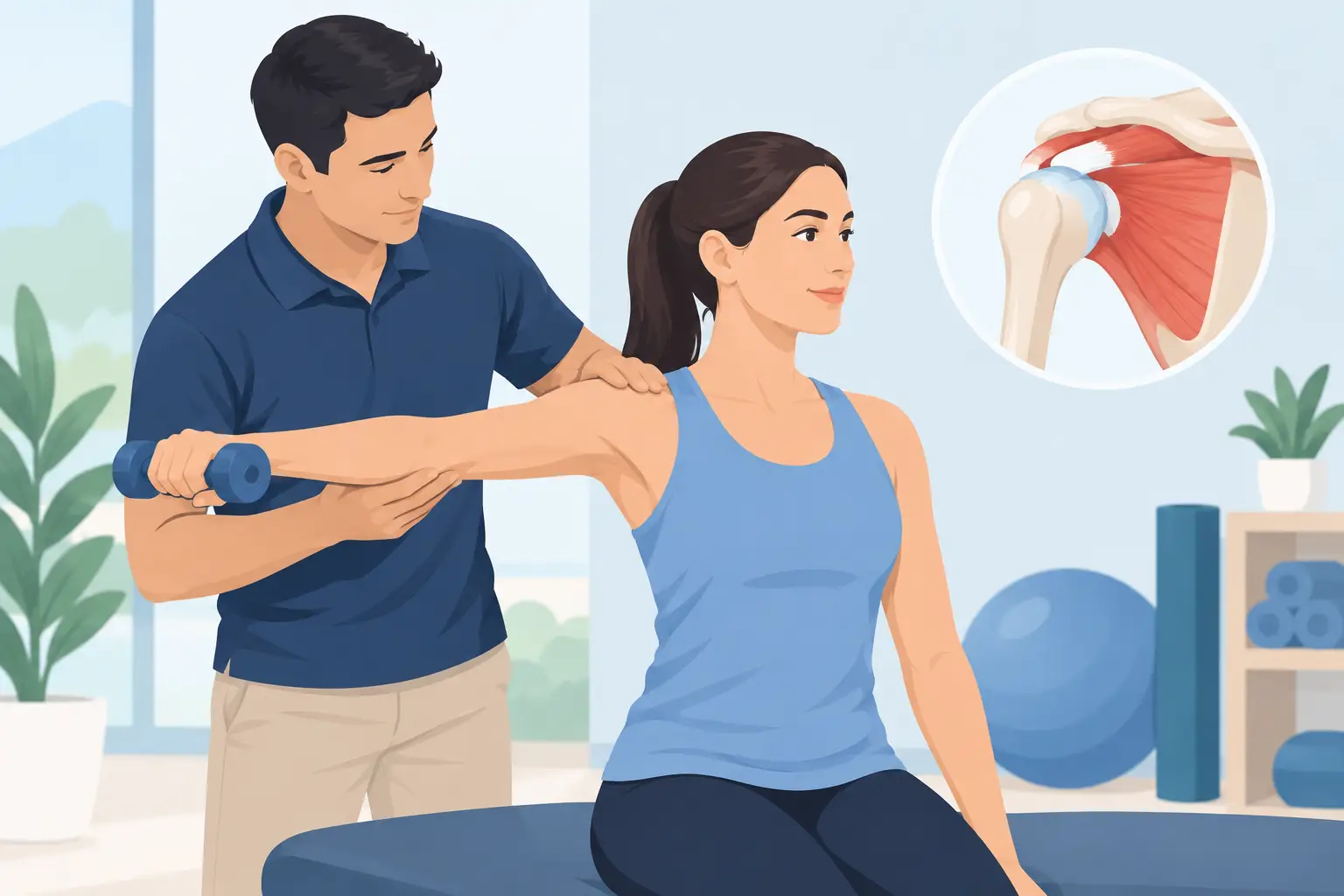
The rotator cuff is a group of four muscles and tendons that helps keep the upper arm centred in the shoulder socket. It supports lifting, reaching, throwing, pushing, and controlled rotation. Pain can develop after a fall, a sudden pull, repetitive overhead work, a sports injury, or a gradual build-up of irritation. The right plan depends on whether you are dealing with tendinopathy, a partial or full-thickness tear, post-surgical recovery, stiffness, or another shoulder condition that feels similar.
Start Rotator Cuff Recovery With a Clear Assessment
Not every painful shoulder is a rotator cuff injury. Neck irritation, arthritis, frozen shoulder, bursitis, instability, and referred pain can all create symptoms around the shoulder. That is why an assessment matters before choosing exercises from a generic video or pushing through a gym program.
A licensed physiotherapist can assess your range of motion, shoulder strength, movement habits, work demands, and the activities you need to return to. They will also consider the pattern of your pain. Pain during a particular movement is different from constant pain at rest, and weakness after a fall needs a different level of attention than soreness after doing more than usual.
Imaging is sometimes helpful, particularly after significant trauma or when a full tear is suspected, but an image alone does not dictate treatment. Some cuff changes are common with age and may not be the main source of pain. Your symptoms, function, examination findings, and goals should shape the plan together.
Seek prompt medical assessment if you have a visible deformity, severe swelling, fever, numbness that is worsening, pain after a major fall or collision, or a sudden inability to lift your arm. A sudden loss of strength following an injury can indicate a more significant tear and should not be managed by waiting it out.
The Healing Timeline Depends on the Injury
There is no universal rotator cuff recovery timeline. Mild irritation may improve meaningfully within several weeks when the shoulder is gradually reloaded. A partial tear, long-standing tendinopathy, or shoulder that has become stiff can take several months. Recovery after rotator cuff surgery often involves a protected early phase followed by progressive rehabilitation over many months.
The key measure is not whether you are pain-free every day. It is whether your shoulder is steadily tolerating more useful movement, more strength work, and more of your real life. Recovery is rarely a straight line. A demanding workday, poor sleep, an awkward lift, or doing too much exercise too soon can cause a temporary flare. That does not always mean you have caused new damage, but it does mean the plan may need adjusting.
A useful rule is to watch your response over the next 24 hours. Mild discomfort during rehabilitation can be acceptable when it settles and does not leave you substantially worse the following day. Sharp pain, escalating night pain, a noticeable drop in function, or pain that lasts well beyond the activity is a sign to reduce the load and speak with your clinician.
Protect the Shoulder Without Stopping All Movement
Complete rest can make a sore shoulder stiffer and less capable. At the same time, repeatedly forcing painful overhead movements or heavy lifts is not rehabilitation. The goal is relative rest: reduce the activities that clearly aggravate symptoms while keeping the shoulder moving within a tolerable range.
In the early phase, this may mean modifying how you lift groceries, changing your sleeping position, taking breaks from repetitive reaching, or using both hands for heavier tasks. If side-sleeping is painful, try supporting the affected arm with a pillow in front of your body. For desk work, keep frequently used items close rather than repeatedly reaching out to the side.
Pain relief strategies can help you stay active, but they are not the full solution. Ice or heat may feel useful depending on the person and stage of injury. Medication questions should be discussed with a pharmacist, physician, or other qualified healthcare professional, especially if you have other health conditions or take regular medication.
Build Back Strength in Stages
Rotator cuff rehabilitation usually progresses from comfortable movement to controlled strength, then to work, sport, or heavier daily tasks. The details should be individualized, particularly after surgery or a traumatic tear.
Restore comfortable movement
Early exercises often focus on maintaining motion without provoking the shoulder. These may include gentle assisted arm raises, pendulum movements, or controlled shoulder blade motions. The objective is not to stretch aggressively. It is to help the shoulder move more normally and reduce guarding.
If your shoulder is very stiff, mobility may need more attention. If you have good mobility but pain and weakness with lifting, strength and load tolerance may become the priority sooner. This is one reason two people with the same diagnosis can need different programs.
Reintroduce controlled loading
As symptoms settle, rehabilitation commonly includes isometric exercises, where the muscles work without much joint movement, followed by band or light-weight exercises. External rotation, internal rotation, rowing patterns, and shoulder blade control may all have a place.
The rotator cuff does not work alone. Your upper back, shoulder blade muscles, chest, trunk, and even how you use your neck can influence how the shoulder handles load. A good program improves the whole movement pattern rather than treating one painful tendon in isolation.
Return to the tasks that matter
The final stage needs to resemble your actual demands. A parent lifting a child, a tradesperson working overhead, a swimmer, and an office worker returning to the gym all need different progressions. This phase may include higher resistance, overhead control, carrying, pushing, pulling, or sport-specific drills.
Do not assume that being able to lift your arm means you are ready for unrestricted activity. Strength, endurance, coordination, and confidence need to return together. Your therapist can help create practical benchmarks, such as completing a work task without a pain flare or lifting a certain weight with good control.
Common Setbacks to Avoid During Rotator Cuff Recovery
The most common setback is doing too much as soon as pain improves. Feeling better is encouraging, but tendon and muscle capacity often lags behind symptom relief. Increase one variable at a time: weight, repetitions, frequency, range, or task difficulty. Changing all of them in the same week makes a flare more likely and makes it harder to identify the cause.
The opposite problem is avoiding the shoulder for too long. When the arm is held close to the body for weeks, stiffness, fear of movement, and weakness can become part of the problem. Recovery works best when loading is gradual, deliberate, and tied to a clear goal.
Technique also matters. Shrugging the shoulder toward the ear, arching through the lower back, or swinging weights can allow you to complete an exercise without training the intended muscles well. Less weight with better control is often the more productive choice.
Finally, do not chase quick fixes. Massage therapy, acupuncture, shockwave therapy, and hands-on treatment may be appropriate in some cases to support pain relief and movement, but they work best when paired with an active rehabilitation plan. No passive treatment replaces progressive strength and a return-to-function strategy.
When Physiotherapy Can Make Recovery More Direct
Consider physiotherapy if pain is limiting sleep, work, exercise, or basic tasks; if you have weakness or recurring flare-ups; or if your shoulder has not improved after a few weeks of sensible activity modification. Early guidance can be particularly valuable for active people who want to keep training safely, as well as for people whose job requires lifting, reaching, or manual work.
At Royal Oak Physio, Chiro, and Massage Clinic, care begins with understanding what your shoulder needs to do in daily life. Your treatment plan can combine targeted exercise, hands-on care when appropriate, education, and progressions that fit your work, home, and activity goals. The focus is practical: move better, hurt less, and know what to do between appointments.
A recovering shoulder does not need perfection. It needs consistent, well-chosen movement and a plan that respects both the injury and the life you want to return to. If progress has stalled or you are unsure what your shoulder can safely handle, a personalized assessment can give you a clearer next step.