
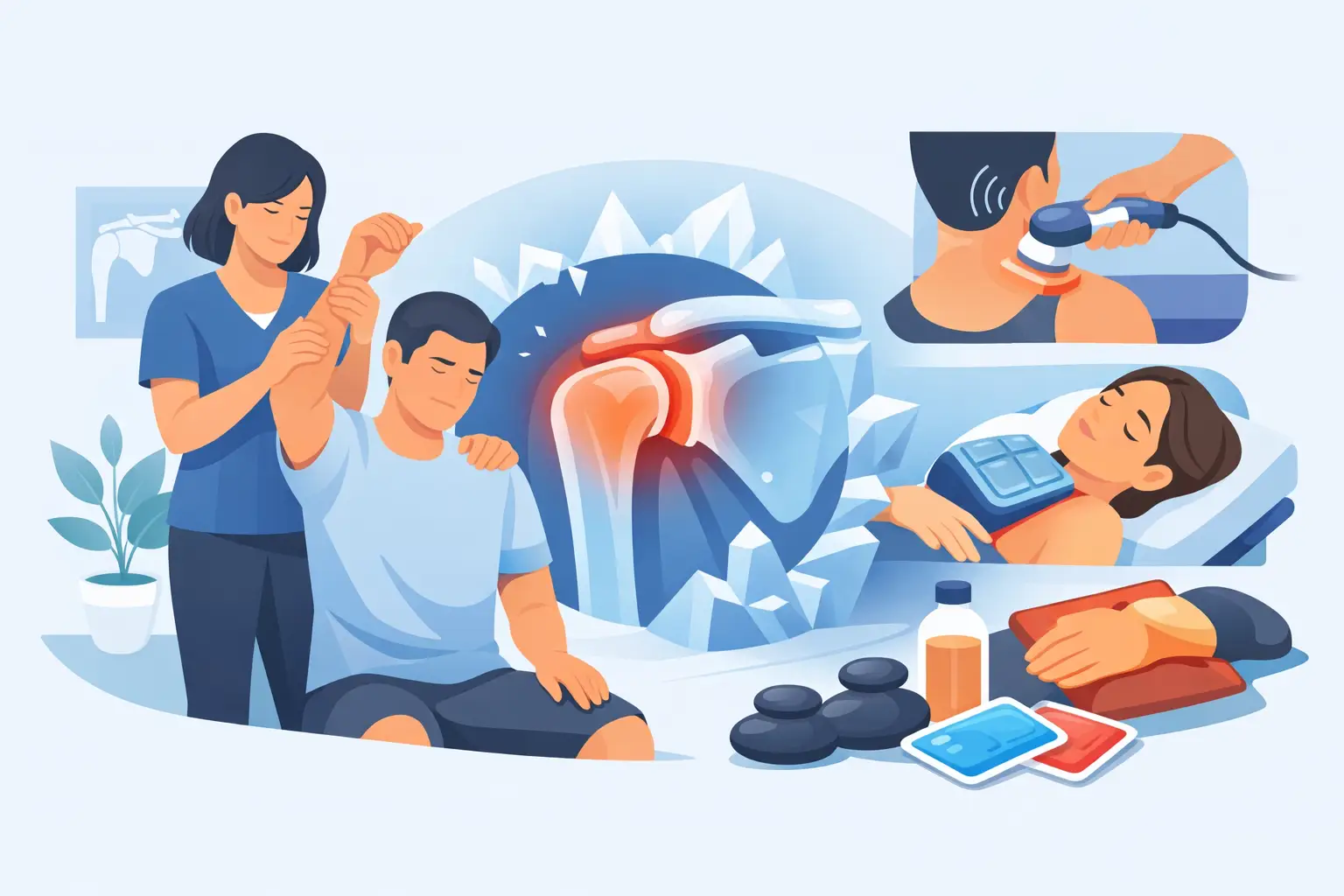
Best Therapies for Frozen Shoulder Relief
A frozen shoulder can make ordinary movements unexpectedly difficult. Reaching into a cupboard, fastening a seatbelt, putting on a coat, or sleeping on one side may become painful long before the shoulder feels truly stiff. The best therapies for frozen shoulder are not about forcing the joint to move. They focus on calming pain, restoring motion at the right pace, and helping you return to daily activities with more confidence.
Frozen shoulder, also called adhesive capsulitis, occurs when the lining around the shoulder joint becomes irritated and tight. The condition often develops gradually and can last many months. It is more common in adults between 40 and 60, people with diabetes or thyroid conditions, and those who have had a period of shoulder immobilization after an injury or surgery. It can also appear without an obvious cause.
The right treatment depends on your stage of recovery, level of pain, range of motion, health history, and goals. A licensed physiotherapist can assess whether your symptoms fit frozen shoulder or whether another problem, such as a rotator cuff injury, arthritis, neck-related pain, or bursitis, may be contributing.
Why the Stage of Frozen Shoulder Matters
Frozen shoulder usually progresses through three overlapping stages. In the painful “freezing” stage, shoulder movement becomes increasingly limited and night pain can be significant. In the “frozen” stage, pain may settle somewhat, but stiffness remains. During the “thawing” stage, range of motion gradually improves.
This matters because aggressive stretching is not always helpful, especially when the shoulder is highly irritable. Pushing hard through pain can leave the joint more inflamed and make sleep or daily function worse. A better plan matches treatment intensity to what your shoulder can tolerate, then progresses as symptoms settle.
Physiotherapy: The Foundation of Frozen Shoulder Treatment
Physiotherapy is often one of the best therapies for frozen shoulder because it provides a structured plan rather than a collection of random stretches. Your therapist will measure how your shoulder moves, identify the movements that are most restricted, assess the neck and upper back, and look at how you are compensating through the rest of your body.
Early treatment may centre on pain reduction, gentle mobility work, posture and movement education, and practical ways to stay active without repeatedly flaring the shoulder. You may be shown comfortable positions for sleeping, easier ways to dress, and simple home movements that fit your current stage.
As pain becomes more manageable, treatment can progress toward guided stretching and joint mobility work. Common targets include reaching overhead, rotating the arm outward, and reaching behind the back. These are often the movements most affected by adhesive capsulitis.
A home exercise program is an important part of progress, but more is not always better. The goal is consistent, tolerable movement. Your physiotherapist can help you understand the difference between a mild stretch sensation that settles and pain that signals you have done too much.
Hands-On Treatment and Exercise Progression
Manual therapy may be used alongside exercise to address shoulder joint stiffness and surrounding soft-tissue tension. Depending on the assessment, this may include gentle joint mobilization, movement techniques, and treatment for the upper back, chest, or shoulder blade muscles that have become overworked.
Exercise should evolve as your shoulder does. Early on, a pendulum movement, supported shoulder slides, or assisted rotation exercises may be appropriate. Later, stretching and gradual strengthening can help rebuild control for lifting, reaching, work tasks, and recreational activity. The best plan is one you can realistically follow between appointments without creating prolonged soreness.
Pain Relief Can Make Movement Possible
When frozen shoulder pain disrupts sleep or makes daily tasks difficult, controlling symptoms can make rehabilitation far more productive. Heat may help some people feel looser before gentle movement, while others get better relief from ice after activity. Neither is a cure, but both can be useful tools when used appropriately.
Your physician or pharmacist can advise whether medication is suitable for you, particularly if pain is limiting sleep and function. Anti-inflammatory medication may not be safe for everyone, including people with certain stomach, kidney, cardiovascular, or medication-related concerns. It is worth getting individualized advice rather than assuming an over-the-counter option is right for you.
A corticosteroid injection may be considered by a physician, particularly in the earlier, more painful stage. For some patients, it can reduce inflammation and pain enough to allow more effective physiotherapy and home exercise. The benefit may be temporary, and an injection does not replace rehabilitation, but it can be a useful part of a coordinated care plan.
Massage Therapy and Acupuncture as Supportive Options
Frozen shoulder affects more than the joint capsule. When you protect a painful shoulder, the neck, upper back, chest, and arm muscles often become tense and fatigued. Massage therapy can help relieve this secondary muscle guarding, improve comfort, and make it easier to participate in movement-based treatment.
Acupuncture may also be considered as a supportive pain-management option for some patients. It is not intended to force the capsule to release, but reduced pain and muscle tension may help you move more comfortably while working through your rehabilitation plan.
These treatments work best when they support clear functional goals. If pain is reduced but you are not gradually restoring comfortable shoulder movement, the plan may need to be adjusted.
When Hydrodilatation or Specialist Care May Help
Some frozen shoulders remain very painful or stiff despite a consistent course of conservative care. In these cases, your physician may discuss further options such as hydrodilatation, also called distension arthrography. This procedure involves injecting fluid into the shoulder joint capsule to stretch it, typically alongside guided rehabilitation.
Surgical treatment, including manipulation under anaesthesia or arthroscopic capsular release, is usually reserved for persistent cases where substantial stiffness and disability continue after non-surgical treatment. These options have potential benefits and risks, so they require a careful conversation with an orthopaedic specialist. Rehabilitation remains important after any procedure to maintain the gains in motion.
What to Avoid During Recovery
The shoulder needs movement, but it also needs respect. Avoid treating frozen shoulder like a simple tight muscle that can be stretched away in one session. Repeatedly forcing painful end-range movement, using heavy resistance before your mobility is ready, or stopping all use of the arm can each slow your progress.
Try to keep the shoulder involved in comfortable daily activity. Small, frequent movements are often easier to tolerate than one long, intense exercise session. If an activity causes a major pain increase that lasts into the next day, scale it back and speak with your therapist about modifying the plan.
A Personalized Plan for Better Shoulder Movement
There is no single treatment that is best for every frozen shoulder. Some people need pain relief first so they can sleep and begin moving. Others are past the highly painful phase and benefit most from progressive mobility and strength work. Health conditions, work demands, and the amount of stiffness all affect the right pace.
At Royal Oak Physio, Chiro, and Massage Clinic, licensed practitioners can build a practical plan around your current symptoms and the activities you want to return to. For patients in northwest Calgary, coordinated physiotherapy and supportive therapies under one roof can make treatment easier to follow and easier to adapt as your shoulder changes.
If your shoulder has become progressively stiff, night pain is affecting your rest, or everyday reaching feels restricted, an assessment can give you a clearer starting point. With patient, targeted treatment, most people can make meaningful progress toward moving better and hurting less.