
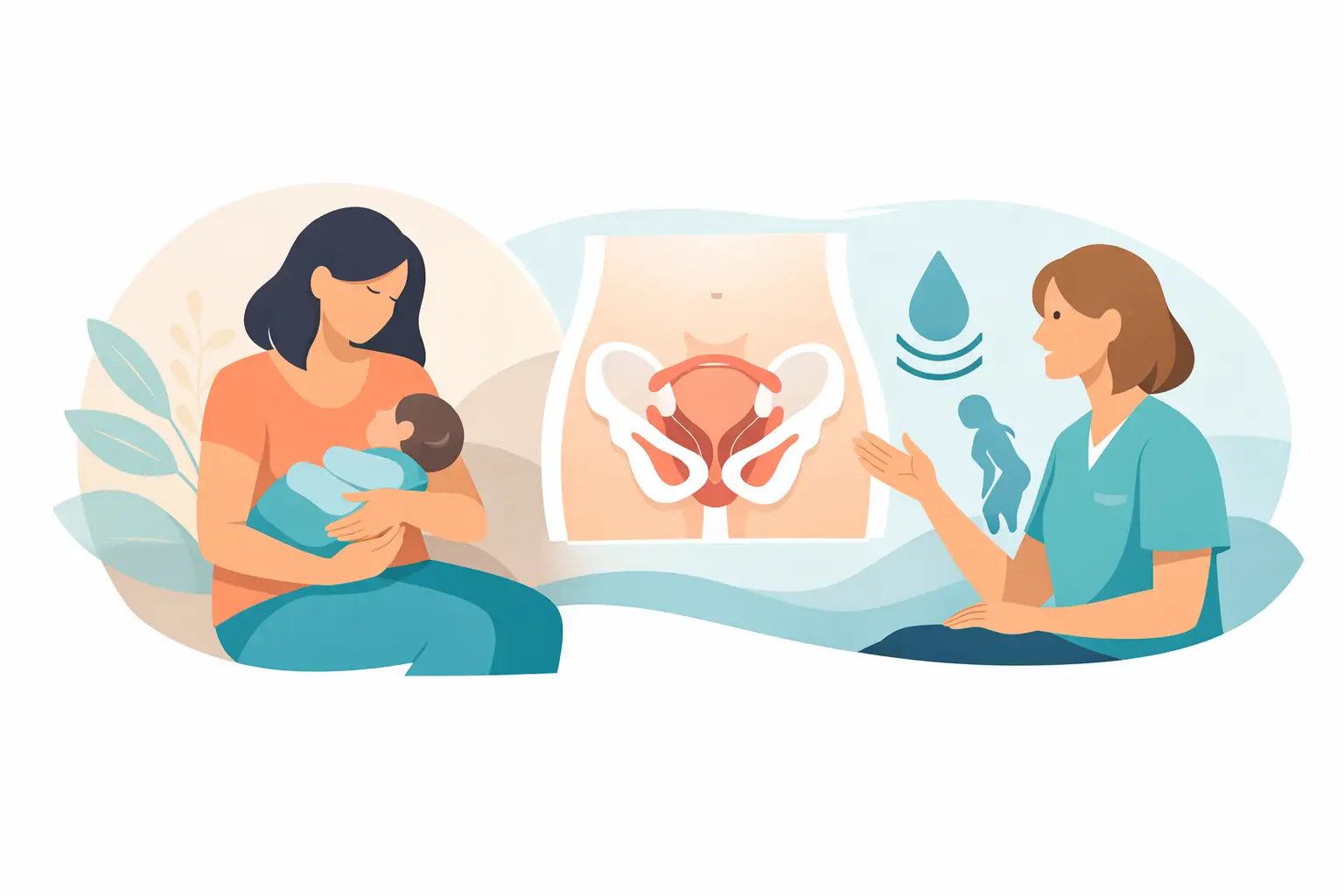
How to Address Postpartum Leakage With Pelvic Physio
A laugh that becomes a leak. A sudden urge on the way to the bathroom. Avoiding a workout because jumping, running, or lifting no longer feels predictable. For many new parents, these are the moments that make them look for ways to address postpartum leakage. It is common, but it does not have to be your new normal.
Postpartum bladder leakage can be frustrating, isolating, and harder to talk about than it should be. The good news is that pelvic floor physiotherapy offers a practical, individualized way to assess why it is happening and build a treatment plan around your body, delivery experience, symptoms, and goals.
Why Postpartum Leakage Happens
Pregnancy places sustained pressure on the pelvic floor, the group of muscles and connective tissues that supports the bladder, bowel, and uterus. Hormonal changes also affect tissue elasticity. During delivery, the pelvic floor may stretch significantly, and some people experience tearing, an assisted vaginal delivery, or a Caesarean birth that changes how the abdominal wall and core function together.
Leakage is often linked to a loss of timing, coordination, strength, or endurance in the pelvic floor. It is not always as simple as muscles being weak. Some pelvic floor muscles are tight, overactive, or unable to relax well. Others may not be working in sync with the diaphragm, deep abdominal muscles, hips, and breathing pattern.
This is why generic advice to do more Kegels can miss the mark. The right exercise can help when it is prescribed for the right person. The wrong approach, or doing too much too soon, may increase pressure and make symptoms persist.
The type of leakage offers useful clues
Stress urinary incontinence is leakage with a cough, sneeze, laugh, lift, run, or jump. It often occurs when pressure in the abdomen rises faster than the pelvic floor can respond.
Urge urinary incontinence is a sudden, intense need to urinate followed by leakage before reaching the toilet. Some people have mixed symptoms, including both stress and urge leakage. A detailed assessment helps identify the pattern and guides treatment.
When Should You Seek Help?
There is no need to wait until your six-week postpartum checkup has passed, or until symptoms have been present for years, before asking questions. Early support can be helpful, particularly if you are worried about bladder control, pelvic heaviness, pain, abdominal separation, or returning to exercise.
A pelvic floor physiotherapist can also help if leakage began months or years after birth. Symptoms can show up later when activity levels increase, sleep is disrupted, a new exercise routine begins, or menopause changes pelvic tissues. Improvement is still possible, regardless of how long ago you delivered.
Contact a physician promptly if you have pain or burning with urination, blood in the urine, fever, an inability to empty your bladder, new numbness, severe pelvic pain, or a sudden major change in bladder or bowel control. These symptoms need medical assessment and should not be managed with exercises alone.
How Pelvic Floor Physiotherapy Can Address Postpartum Leakage
Pelvic floor physiotherapy starts with listening. Your therapist will ask about your pregnancy and delivery, current symptoms, bladder habits, bowel function, activity level, pain, sleep, and the situations where leakage occurs. Your goals matter too. You may want to lift your baby without worry, return to a sport, make it through a workday comfortably, or simply stop planning every outing around the nearest washroom.
Assessment may include breathing, posture, abdominal wall function, hip and low-back movement, and how you manage pressure during activities such as a squat, cough, or lift. With your informed consent, an internal pelvic floor assessment may be recommended. This can provide valuable information about muscle strength, relaxation, coordination, sensation, and pelvic organ support. It is always your choice, and treatment can be adapted if an internal assessment is not appropriate or preferred.
Treatment is more than pelvic floor exercises
Your care plan may include targeted pelvic floor training, but it should also address how you move through daily life. A therapist may teach you how to coordinate an exhale and pelvic floor contraction before a lift, how to reduce breath-holding during effort, or how to modify a workout while you recover.
Treatment can include manual therapy when appropriate, strategies to improve pelvic floor relaxation, progressive core and hip strengthening, bladder retraining, and education on fluid intake and constipation management. If scar sensitivity from a tear, episiotomy, or Caesarean birth is contributing to discomfort or restricted movement, your therapist can provide guidance for gradual scar mobility work.
The plan should progress at a pace that fits your symptoms. Returning to running, high-impact classes, or heavy lifting is not automatically unsafe after childbirth, but it is wise to build capacity first. A gradual return often produces better long-term results than pushing through leaking, heaviness, or pain.
Everyday Changes That Can Support Recovery
Small changes can reduce bladder pressure while you work on the underlying causes. Avoid going to the bathroom “just in case” too often, as this can train the bladder to signal urgency at lower volumes. At the same time, do not severely limit fluids in an effort to prevent leaking. Concentrated urine can irritate the bladder, and hydration supports overall recovery.
Constipation deserves attention as well. Repeated straining puts additional load on the pelvic floor. Regular meals, adequate fluids, fibre, comfortable toilet positioning, and medical advice when needed can make a meaningful difference.
Consider how you lift and carry throughout the day. Feeding, car seats, laundry, strollers, and repeated floor-to-stand transfers all add up. Exhaling with effort, bringing a load close to your body, and avoiding rushed, breath-held movements can help manage pressure more effectively.
Pads and liners can provide short-term peace of mind, especially early in recovery. They are a useful tool, not a failure. But if you are relying on them long term, a pelvic health assessment can help identify options that aim to reduce the leakage itself.
What Progress Can Look Like
Recovery is not always linear. Sleep deprivation, a cough, a return to work, hormonal shifts while breastfeeding, and a sudden jump in exercise can temporarily change symptoms. Progress may first look like fewer leaks, less urgency, more time between bathroom trips, or feeling more in control during a cough or lift.
For some people, improvement happens over several weeks of consistent practice. For others, especially with more complex symptoms, it may take longer and involve coordination with a physician or other health providers. The goal is not a one-size-fits-all timeline. It is measurable, functional progress that helps you move with more confidence.
A Practical Next Step
You deserve care that looks beyond a single symptom and considers your full recovery. At Royal Oak Physio, Chiro, and Massage Clinic, pelvic floor physiotherapy is built around a personalized assessment and clear treatment plan, so you understand what is contributing to your symptoms and what you can do next.
Postpartum leakage is common, but accepting it without support is not your only option. A pelvic health assessment can give you practical answers, a safe plan for returning to the activities you enjoy, and a clearer path toward feeling like yourself in your body again.