
How Shockwave Therapy Treats Plantar Fasciitis
The first few steps out of bed can make plantar fasciitis feel like a sharp reminder that your heel is not ready for the day. When stretching, supportive shoes, and activity changes have not brought enough relief, many people ask how shockwave therapy treats plantar fasciitis and whether it could help them return to walking, work, or sport with less pain.
Shockwave therapy can be a useful treatment for persistent heel pain, particularly when it is part of a personalized plan rather than a stand-alone fix. At Royal Oak Physio, Chiro, and Massage Clinic, treatment begins with assessing the source of your symptoms, the demands of your daily life, and the factors that may be keeping the tissue irritated.
Why plantar fasciitis can linger
The plantar fascia is a strong band of connective tissue running along the bottom of the foot, from the heel toward the toes. It helps support the arch and transfers force as you walk, run, climb stairs, or stand for long periods.
Plantar fasciitis usually causes pain near the inside-bottom edge of the heel. It is often most noticeable with the first steps after rest, then may ease as you move. For some people, however, pain returns after a long shift, a workout, or a day spent on hard surfaces.
The condition is not always caused by one obvious injury. A recent increase in running or walking, long hours standing at work, reduced ankle mobility, tight calf muscles, changes in footwear, foot mechanics, and body-wide health factors can all contribute. In longer-lasting cases, the issue may involve more than simple inflammation. The fascia can develop changes related to repeated overload and incomplete healing, which is one reason rest alone may not solve the problem.
How shockwave therapy treats plantar fasciitis
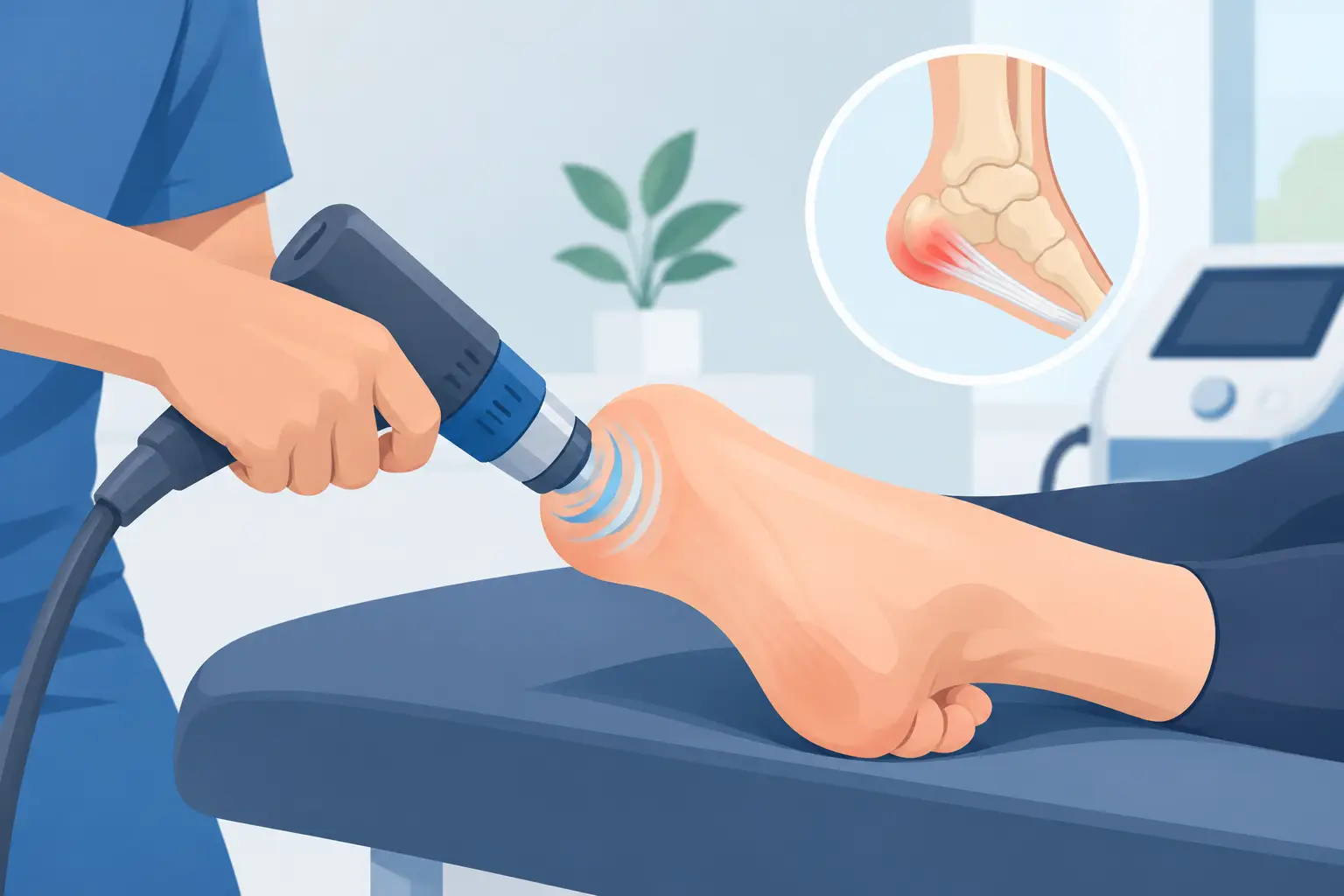
Shockwave therapy, also called extracorporeal shockwave therapy or ESWT, uses controlled acoustic pressure waves delivered through the skin to the painful area. A clinician applies gel to the heel and moves a treatment applicator across the targeted tissue. No needles or surgery are involved.
The goal is not to numb the pain temporarily. The mechanical energy is intended to stimulate the body’s healing response in tissue that has been slow to recover. Research suggests shockwave therapy may support blood flow, cell activity, and tissue remodelling while reducing pain sensitivity in the treated area. In practical terms, it can help a stubborn plantar fascia tolerate gradual loading and movement more comfortably.
This is why shockwave therapy is often considered for chronic plantar heel pain that has continued despite a period of appropriate conservative care. It does not instantly repair the fascia. Improvement is usually gradual as the tissue responds and you rebuild strength and capacity through your rehabilitation plan.
Focused versus radial shockwave treatment
Clinics may use focused or radial shockwave technology. Focused shockwave can target energy more deeply and precisely, while radial shockwave spreads pressure waves over a broader area closer to the surface. Neither option is automatically best for every heel.
Your therapist considers the location and duration of pain, tissue sensitivity, your medical history, and the findings from your assessment. The right treatment is the one that fits the clinical picture, not simply the machine that sounds more advanced.
What a shockwave appointment feels like
A shockwave session is usually brief, often taking only several minutes once the assessment and setup are complete. The sensation is commonly described as a series of quick taps or pulses against the heel. It can be uncomfortable over a very tender spot, but your therapist can adjust the intensity to a level you can tolerate.
Mild soreness or sensitivity afterward is possible, much like the feeling after a demanding treatment or workout. Some people notice short-term improvement, while others need time before changes are clear. Your clinician will explain what to expect based on the treatment settings and your symptoms.
A course often includes multiple appointments, commonly spaced about a week apart. The exact number varies. A person with heel pain for several months and substantial morning stiffness may need a different plan than an active walker whose symptoms started recently. Progress is measured by useful markers: less pain with first steps, longer standing tolerance, improved walking comfort, and a safer return to the activities you value.
Shockwave works best with a complete recovery plan
Heel pain rarely exists in isolation. If the plantar fascia is overloaded every day, treating the sore point without changing the overload may produce only partial or short-lived results. That is why shockwave therapy is most effective when paired with practical rehabilitation.
Your plan may include hands-on treatment and exercises to improve calf flexibility, ankle movement, foot strength, and balance. Progressive loading helps the plantar fascia and supporting muscles become more capable of handling walking, stairs, work demands, or sport. The pace matters. Doing too much too soon can flare symptoms, while avoiding all activity for too long can leave the foot less prepared for normal demands.
Footwear is another common piece of the picture. A worn-out shoe, a sudden change to minimalist footwear, or poor support for your particular foot can aggravate symptoms. In some cases, supportive taping, heel cushions, or custom orthotics may be considered to improve comfort while the tissue recovers. These tools should support your rehabilitation, not replace it.
A physiotherapist may also look beyond the foot. Hip strength, gait patterns, training volume, workplace surfaces, and the way your ankle moves can influence how much force reaches the plantar fascia. This broader assessment is especially valuable for runners, active adults, and people whose work keeps them on their feet all day.
Who may be a good candidate?
Shockwave therapy may be worth discussing if you have ongoing plantar heel pain that has not improved enough with a well-followed conservative plan. It can be particularly relevant when symptoms have lasted for several months, morning pain is limiting your routine, or heel pain is preventing you from returning to exercise.
It is not appropriate for everyone. Treatment may need to be avoided or modified for people with certain circulation or bleeding concerns, reduced sensation in the area, infection or open skin at the treatment site, or other health considerations. Pregnancy, cancer near the treatment area, and some medications also require a careful clinical discussion. Your licensed practitioner should review your health history before recommending treatment.
Not every painful heel is plantar fasciitis, either. Nerve irritation, a stress injury, arthritis, bursitis, Achilles tendon concerns, and other conditions can cause similar symptoms. Persistent pain, swelling, numbness, pain at night, or an inability to bear weight deserve a proper assessment rather than self-treatment based on an online description.
Getting more from your treatment
The most helpful approach is to treat shockwave as one step in a plan, not as permission to push through severe pain. Keep your therapist informed about changes in symptoms and follow the agreed activity guidance between sessions. Wear footwear that feels supportive for your normal routine, and complete the exercises prescribed for your specific needs.
You do not need to stop moving completely. In fact, controlled movement is often part of recovery. The key is choosing a level of activity your heel can tolerate, then building from there. Someone training for a race may need temporary changes to mileage and intensity, while someone with a standing job may benefit from pacing strategies and footwear adjustments.
Lasting relief from plantar fasciitis is often less about one treatment and more about giving the foot the right conditions to recover. A focused assessment can clarify whether shockwave therapy fits your situation and build a practical path toward easier mornings, steadier steps, and movement that feels like yours again.