
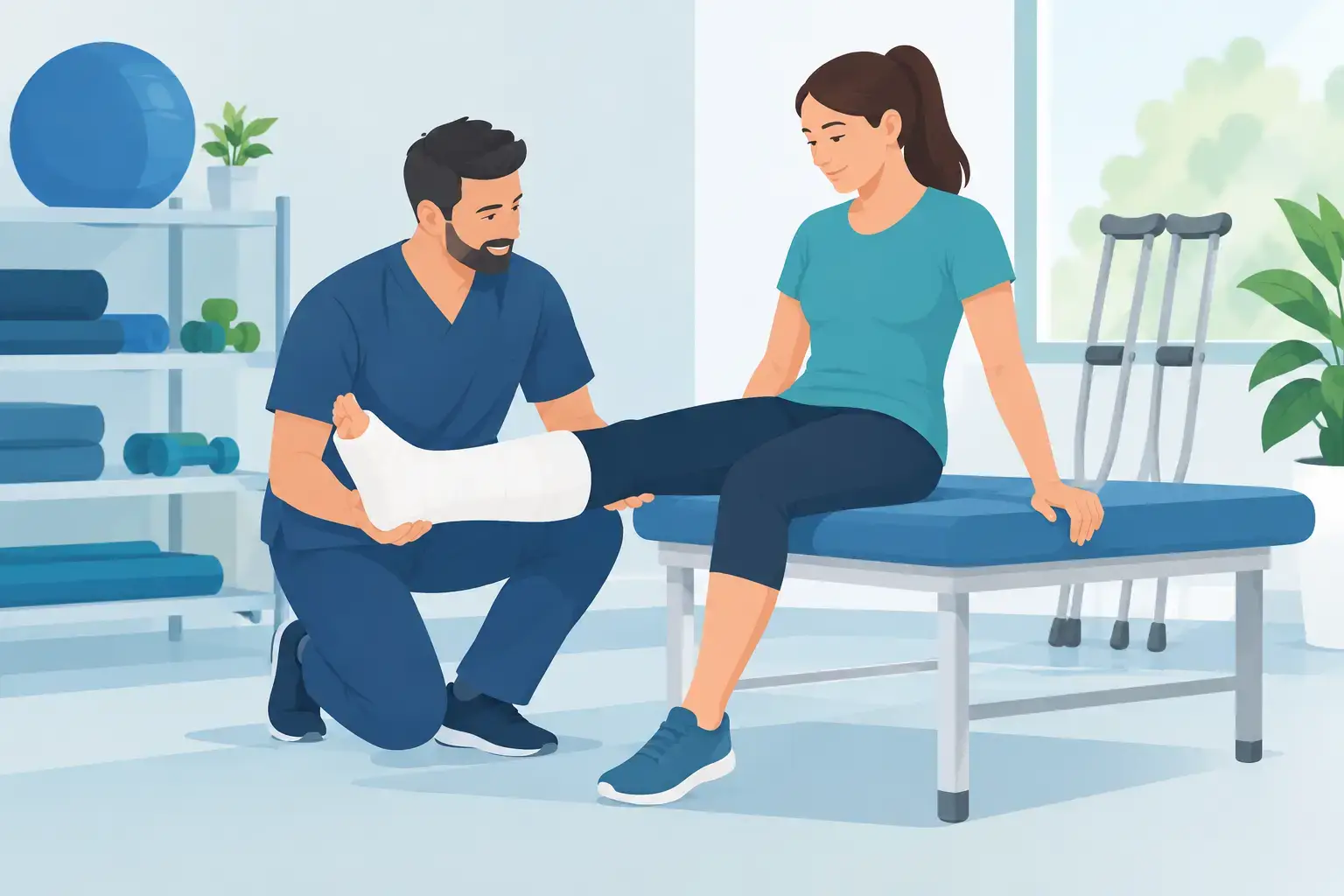
Your Guide to Post-Fracture Rehabilitation
A fracture can change everyday life quickly. Getting around the house, returning to work, sleeping comfortably, or carrying groceries may feel much harder than expected. This guide to post fracture rehabilitation explains what happens after the cast, boot, brace, or surgical restrictions come off, and how a personalized plan can help you move better, hurt less, and return to the activities that matter to you.
Healing Is Not the Same as Being Fully Recovered
A bone may be healing well on an X-ray while the surrounding muscles, joints, tendons, and nervous system are still catching up. Immobilization is necessary for many fractures, but it can also lead to stiffness, swelling, weakness, reduced balance, and changes in how you walk or use the injured limb.
This is why recovery often feels slower than people expect. A wrist fracture may leave you with trouble gripping a steering wheel or opening a jar. After an ankle fracture, walking can feel uneven even after you are cleared to put weight through the foot. A shoulder fracture can affect reaching, dressing, and sleep.
Post-fracture rehabilitation addresses these practical limitations. The goal is not simply to make the pain disappear. It is to restore safe movement, rebuild confidence, and help prevent a new injury caused by weakness, stiffness, or compensating in the wrong way.
When to Start Post-Fracture Rehabilitation
The right time to begin depends on the bone involved, the type of fracture, whether surgery was required, your age, and your physician or surgeon’s instructions. Some people are referred to physiotherapy while still wearing a brace or boot, with treatment focused on safe movement in nearby joints, swelling management, and maintaining strength elsewhere in the body. Others begin more active rehabilitation once imaging and medical follow-up confirm that the bone can tolerate greater load.
Do not assume that pain alone tells you whether an activity is safe. Some discomfort and stiffness can be expected during rehabilitation, especially after a period of immobilization. Sharp pain, rapidly increasing swelling, numbness, new colour changes, fever, wound concerns, or a sudden loss of function should be assessed promptly by your medical team.
A licensed physiotherapist can work within your restrictions and communicate treatment goals clearly. The plan should progress according to healing, symptoms, movement quality, and your real-life demands, rather than following a one-size-fits-all timeline.
What a Physiotherapy Assessment Looks For
A strong rehabilitation plan starts with a complete assessment. Your therapist will review how the injury happened, your imaging or surgical guidance where available, current restrictions, medications, work demands, recreational goals, and previous injuries.
They will also look beyond the fracture site. For example, someone recovering from a broken ankle may develop hip weakness or knee pain from limping. A person protecting a healing wrist may start holding tension through the neck and shoulder. Identifying these changes early can reduce unnecessary setbacks.
Your assessment may include range-of-motion testing, strength testing, gait analysis, balance checks, swelling measurements, and functional tasks such as reaching, climbing stairs, getting up from a chair, or lifting an object. These findings help create measurable goals. That may mean walking your dog without a limp, returning to a physically demanding job, getting back on the ice, or simply using the stairs with confidence.
A Guide to Post-Fracture Rehabilitation: The Main Stages
Recovery rarely moves in a perfectly straight line. A busy day, poor sleep, or an increase in activity can cause symptoms to flare temporarily. Still, most rehabilitation plans follow a gradual progression.
Restore comfortable movement
Early treatment commonly focuses on swelling control, pain relief, and restoring movement without stressing the healing bone. Depending on your condition, this can include gentle hands-on therapy, guided mobility exercises, soft tissue work, and education on safe positioning and pacing.
The objective is to avoid letting stiffness become a longer-term problem. Your therapist may also prescribe simple home exercises. Doing a small amount consistently is usually more effective than doing too much on a good day and needing several days to recover afterward.
Rebuild strength and load tolerance
Once it is medically appropriate, rehabilitation shifts toward strengthening. Muscles lose capacity quickly when a limb is not being used normally. Strength work may begin with controlled, low-load exercises and gradually progress to resistance, weight-bearing, carrying, pushing, pulling, or sport-specific drills.
Load needs to be increased carefully. Too little challenge can slow progress, while too much too soon can cause pain, swelling, or irritation that limits training. Your therapist adjusts the plan based on how your body responds during treatment and over the following 24 hours.
Improve balance, coordination, and confidence
After a lower-body fracture, strength alone is not enough. Your balance and coordination may have changed, particularly after a period in a boot, cast, or on crutches. Targeted exercises can help you regain steadiness on uneven ground, stairs, curbs, and busy work environments.
For upper-body injuries, coordination may involve reaching overhead, gripping, lifting, or returning to repetitive tasks. Rehabilitation should reflect what you actually need your body to do, not just what looks good in the clinic.
Return to work, sport, and daily routines
The final stage is about readiness. A desk worker may need to tolerate keyboard use and long drives without pain. A warehouse employee may need lifting capacity and safe movement under load. A runner needs more than a pain-free walk before returning to impact training.
Your physiotherapist can help build a staged return plan. This may include modified duties, progressive gym exercises, work-simulation tasks, or gradual sport drills. Returning too early can be frustrating, but waiting until you feel completely deconditioned can also make the process harder. The best timing is individual.
Treatments That May Support Your Recovery
Physiotherapy is often central to post-fracture care, but a coordinated approach can be helpful when pain, muscle tension, or movement restrictions are affecting your progress. Massage therapy may help address tight muscles that have been overworking to protect an injured area. Acupuncture may be considered for pain management in appropriate cases. Chiropractic or osteopathic care may support mobility in related joints when it fits your treatment plan.
These services are not replacements for fracture management, medical imaging, or surgical follow-up. They are tools that may be used alongside a rehabilitation program when clinically appropriate. At Royal Oak Physio, Chiro, and Massage Clinic, licensed practitioners can coordinate care under one roof so that treatment remains focused on the same functional goals.
Your Home Program Matters
Clinic treatment provides guidance, progression, and hands-on support. Your daily habits are where much of the recovery work happens. A home program should be practical enough to follow, even when you are busy, tired, or managing work and family responsibilities.
Follow the exercise dose prescribed for you rather than borrowing exercises from social media or copying someone else’s recovery plan. Fractures that appear similar can have very different restrictions. The exact location of the break, surgical repair, bone quality, and healing progress all matter.
It also helps to track changes in pain, swelling, stiffness, and function. You do not need to monitor every sensation. Instead, pay attention to patterns. Are stairs becoming easier? Can you walk farther before limping? Does the limb settle after exercise, or is swelling lasting into the next day? This feedback helps your therapist make useful adjustments.
Factors That Can Slow Recovery
Age is only one part of the picture. Recovery can also be influenced by the severity of the fracture, smoking, diabetes, osteoporosis, nutrition, sleep, prolonged inactivity, and fear of movement. None of these automatically prevents a good outcome, but they may require a more gradual plan and closer communication with your healthcare team.
Fear is especially common after a fall, a sports injury, or a motor vehicle accident. It makes sense to feel cautious when the body has been injured. Rehabilitation provides a structured way to rebuild trust in your movement through manageable steps, rather than forcing yourself to “push through” pain or avoiding activity altogether.
If you have had a low-impact fracture, particularly as an older adult, speak with your physician about bone health and fall-risk assessment. Preventing another fracture is part of protecting your long-term independence.
A Practical Next Step
Post-fracture rehabilitation is not about rushing the process. It is about making steady, well-supported progress from protected healing to comfortable, capable movement. If you are dealing with stiffness, weakness, lingering pain, or uncertainty after a fracture, book an assessment with a licensed physiotherapist. A clear plan can turn recovery from a waiting game into meaningful progress you can feel in daily life.