
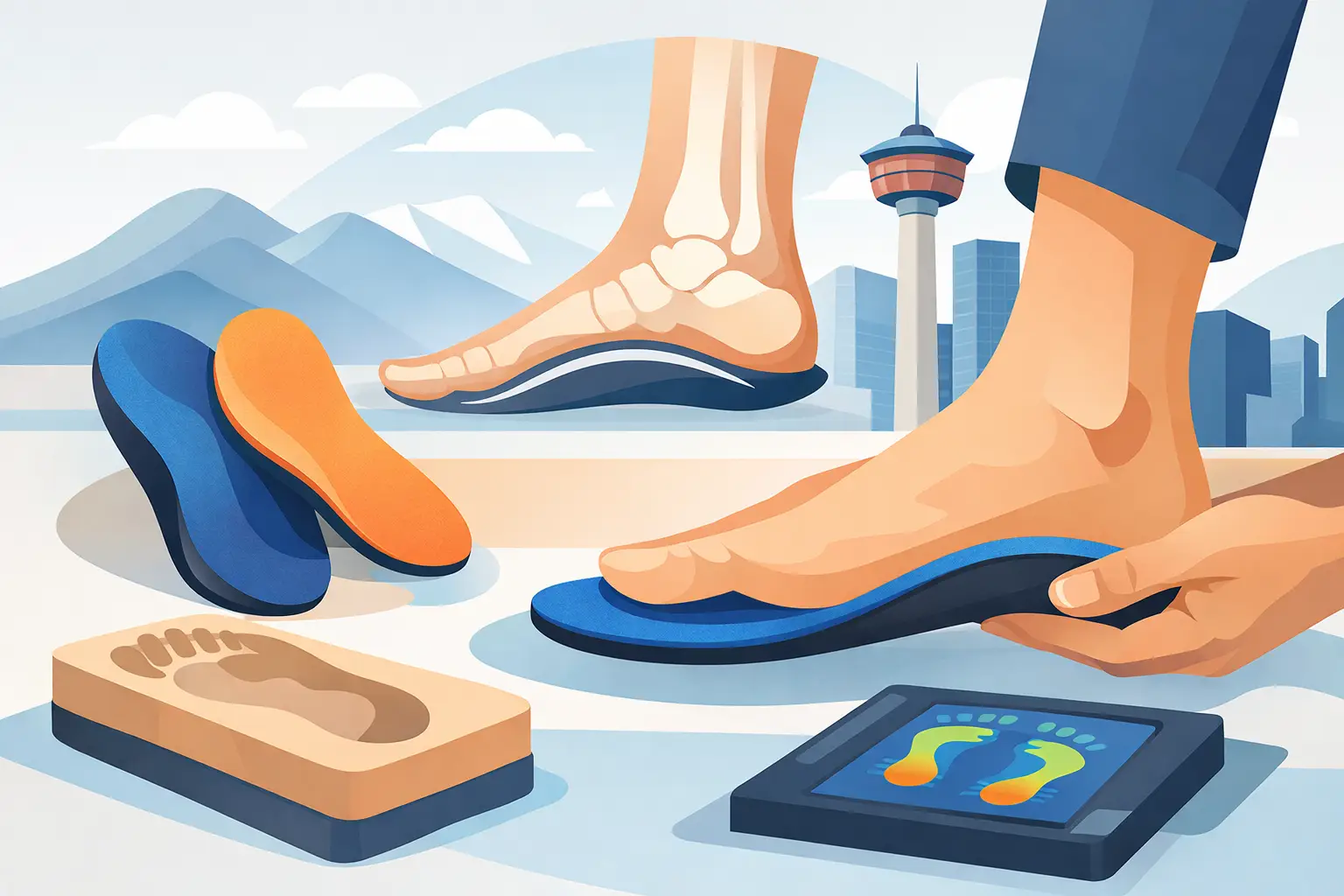
Guide to Custom Foot Orthotics in Calgary
A dull ache under the heel on your first steps of the morning. Knee pain that starts halfway through a walk. A recurring shin or hip problem that returns every time you increase your training. These concerns do not always begin where they hurt. This guide to custom foot orthotics explains how foot support can be part of a practical treatment plan for better movement, less pain, and more confidence in daily activity.
Custom orthotics are not simply cushioned insoles. They are prescription devices designed around the shape, movement, pressure patterns, and specific needs of your feet. For the right person, they can reduce strain on irritated tissues and improve how force travels from the ground through the ankles, knees, hips, and low back.
What custom foot orthotics are designed to do
Every step places force through your feet. If a joint moves too much, too little, or in a way that repeatedly stresses certain tissues, that load can contribute to pain over time. Orthotics are made to support, accommodate, or guide the foot according to what your assessment shows.
For example, an orthotic may help distribute pressure away from a painful area under the forefoot, support an arch that collapses excessively during walking, cushion a sensitive heel, or create more room for a prominent joint. The goal is not to force every foot into an ideal shape. The goal is to create a more comfortable and efficient foundation for the activities you need to do.
This can be useful for people who spend long hours standing at work, walk for exercise, play field or court sports, run, or manage joint changes associated with aging. It can also help when footwear alone does not provide enough support or when an old injury has changed the way you load one side of your body.
Orthotics are often one part of care, rather than the entire solution. If weakness, restricted mobility, training load, footwear, or movement habits are contributing to pain, those factors deserve attention too. A well-made device can support recovery, but it works best within a plan that addresses the cause of the problem.
Who may benefit from custom orthotics?
A custom orthotic assessment may be worth considering if foot or lower-body pain is limiting your daily movement, work, sport, or recovery. Common reasons people seek orthotics include plantar heel pain, arch pain, forefoot pain, bunions, Achilles tendon irritation, shin pain, knee discomfort, and recurring ankle or foot injuries.
Some people with flat feet benefit from added support, while others with high arches need better cushioning and pressure distribution. People with arthritis, diabetes-related foot concerns, leg-length differences, or changes after surgery may also need a more tailored approach. A diagnosis alone does not determine whether orthotics are right for you. Two people with the same condition can have very different foot mechanics, footwear needs, and activity goals.
Children and teens may sometimes be assessed for foot pain, frequent tripping, fatigue with activity, or concerns about walking patterns. Growing feet need careful consideration. Orthotics should be recommended based on symptoms and function, not because a child’s feet look different from someone else’s.
If you have numbness, unexplained swelling, skin breakdown, sudden severe pain, a wound that is not healing, or significant circulation concerns, seek timely medical assessment. Orthotics may still have a role, but the underlying issue needs appropriate clinical attention first.
What happens during a custom orthotic assessment?
A proper assessment looks beyond a footprint. Your clinician will ask where and when your symptoms occur, what shoes you wear, how active you are, what treatments you have tried, and what you need to get back to. Someone training for a half marathon has different requirements than someone who stands on concrete for an eight-hour shift.
The physical exam may include looking at your posture, foot shape, joint mobility, muscle strength, balance, walking pattern, and how your shoes are wearing down. Your clinician may observe you walking or performing movements related to your sport or job. They will also examine the painful area to determine whether the issue appears related to foot mechanics, tissue irritation, footwear fit, or another concern.
If custom orthotics are appropriate, a detailed impression or digital scan of your feet is taken. The prescription can include elements such as arch support, heel cushioning, metatarsal support, posting to influence foot motion, or targeted accommodation for a sensitive area. The device is then fabricated for your needs and fitted in person.
At Royal Oak Physio, Chiro, and Massage Clinic, orthotic care can be coordinated with physiotherapy, chiropractic care, massage therapy, or other treatments when that makes sense for your recovery. This helps ensure your foot support is working alongside your mobility, strength, and pain-management plan.
Custom devices versus store-bought insoles
Over-the-counter insoles can be a reasonable starting point for mild, short-term discomfort or for people who simply want more cushioning in a roomy shoe. They are readily available and cost less than a custom device. However, they come in standard shapes and cannot be adjusted to address your particular pressure points, asymmetry, injury history, or movement pattern.
Custom orthotics cost more because they involve a clinical assessment, individualized prescription, fabrication, and fitting. They are not automatically better for every person. If a prefabricated insert meets your needs, a clinician should be honest about that. But when pain is persistent, repeated, or clearly connected to a structural or mechanical concern, personalized support may offer a more appropriate option.
The quality of the assessment matters as much as the device itself. An orthotic should be prescribed for a clear functional reason, with realistic expectations about what it can and cannot change.
Choosing the right shoes for your orthotics
Even an excellent orthotic cannot perform well in the wrong shoe. Bring the footwear you use most often to your fitting appointment whenever possible. Work boots, running shoes, casual shoes, and safety footwear all have different shapes and depth.
In general, a shoe should have enough removable space for the orthotic without compressing the top of your foot. A secure heel counter and a stable sole can help the device work as intended. Shoes that are stretched out, heavily worn on one edge, too narrow, or too shallow may create discomfort and reduce the benefit of your orthotics.
You may need more than one pair if your work, exercise, and everyday footwear differ significantly. In some cases, one orthotic can transfer between compatible shoes. In others, a separate pair is more practical. Your clinician can help you decide based on how often you wear each type of shoe and where symptoms are occurring.
What to expect when you start wearing them
There is usually an adjustment period. Begin by wearing your orthotics for a short period indoors or during low-demand activity, then gradually increase the time over several days to a couple of weeks. Mild awareness of new support can be normal at first. Sharp pain, increasing numbness, rubbing, or symptoms that continue to worsen are not signs that you should simply push through.
If the device feels wrong, contact your clinic. A fit check or adjustment may be needed. Small changes can make a meaningful difference, especially when the orthotic is being used for a specific pressure point, foot pain, or sport-related concern.
Your symptoms may improve before your walking tolerance, strength, or confidence fully return. Continue with the exercises, activity modifications, and treatment recommendations in your care plan. For runners and active adults, return-to-sport decisions should consider pain levels during and after activity, not just how the feet feel while the orthotics are in place.
Care, follow-up, and insurance questions
Keep orthotics dry, remove them from wet shoes, and wipe them with a damp cloth as needed. Avoid high heat, which can alter materials. The top cover may wear before the support structure does, and some devices can be refurbished or adjusted depending on their construction.
How long orthotics last depends on their materials, your body weight, activity level, shoe rotation, and how much force they absorb. A desk worker who wears them in casual shoes may have different replacement needs than a warehouse worker or distance runner. Follow-up is useful when your pain changes, your shoes change, the orthotics show wear, or the device no longer feels supportive.
Many extended health plans include some coverage for custom foot orthotics, but requirements vary. Plans may require a prescription, a detailed receipt, proof of assessment, or a referral from a physician or other eligible provider. Check your individual plan before purchasing so you understand the documentation and coverage limits.
Foot pain can make simple routines feel like work. The right orthotics should fit your real life, not ask you to reorganize it. A thoughtful assessment can help you choose support that matches your body, your shoes, and the movement goals that matter most to you.