
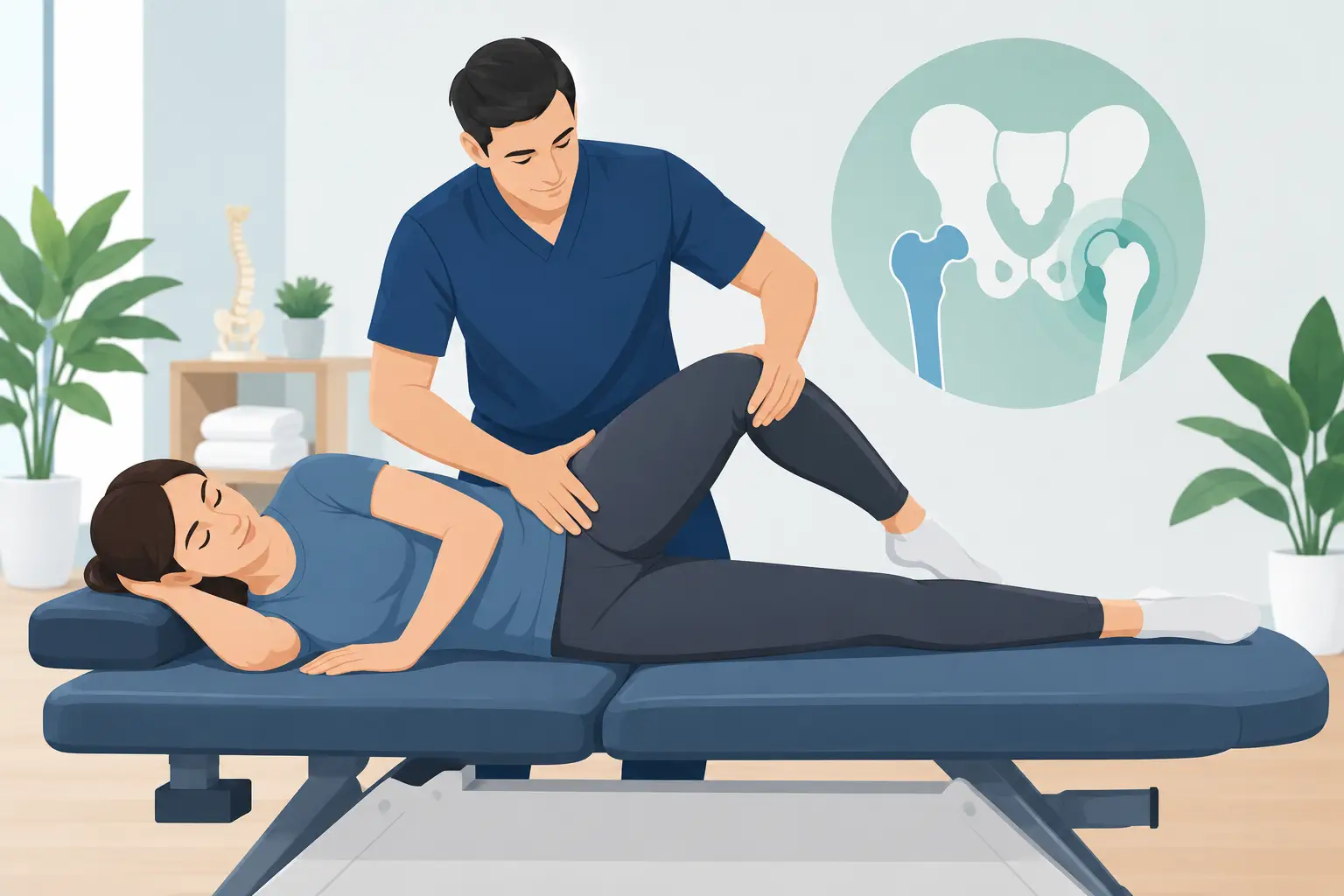
Chiropractic Care for Hip Pain and Better Movement
Hip pain has a way of changing ordinary routines. Getting out of the car, climbing stairs, walking the dog, sleeping on one side, or returning to the gym can suddenly require planning. Chiropractic hip pain care may help when joint stiffness, muscle tension, movement habits, or pain referred from the low back are contributing to the problem. The first step is understanding where your pain is coming from and what it is stopping you from doing.
At Royal Oak Physio, Chiro, and Massage Clinic, care starts with a thorough assessment rather than a one-size-fits-all adjustment. The goal is practical: reduce pain where possible, improve how you move, and give you a clear plan for returning to the activities that matter to you.
Why hip pain is not always coming from the hip
The hip is a deep ball-and-socket joint that works closely with the lower back, pelvis, knees, feet, and surrounding muscles. Pain felt around the hip can come from the joint itself, but it can also be referred from the lumbar spine or linked to how the pelvis and leg are moving during walking, squatting, running, or sitting.
Pain at the front of the hip or groin can be associated with the hip joint, hip flexor irritation, or arthritis. Pain on the outside of the hip is often related to irritated tendons or the bursa near the greater trochanter. Pain in the buttock may involve the lower back, gluteal muscles, deep hip rotators, or the sacroiliac region. These patterns overlap, which is why self-diagnosing based on location alone can be misleading.
A chiropractor looks at the full movement system. Your assessment may include your posture, walking pattern, hip and low-back range of motion, strength, balance, joint mobility, and the specific movements that reproduce symptoms. Your practitioner will also ask about your work demands, exercise routine, previous injuries, sleep, and your goals for recovery.
When chiropractic care for hip pain may help
Chiropractic care may be a useful part of treatment for mechanical hip pain, meaning pain influenced by movement, position, muscle control, or joint restriction. People often seek care after a flare-up from lifting, a new running program, long hours at a desk, a slip or fall, or a gradual build-up of stiffness that has started to limit daily activity.
Treatment may include hands-on joint mobilization or manipulation where appropriate, soft-tissue techniques, movement education, and an exercise plan. These approaches are not intended to simply chase symptoms. They are used to help improve tolerance for movement and address contributing factors such as reduced hip mobility, low-back stiffness, poor gluteal strength, or a pattern of overloading one side of the body.
For example, a person with outer hip pain may feel worse after lying on that side, crossing their legs, or walking on uneven ground. In that case, treatment may focus on reducing irritation, improving pelvic and hip control, and gradually strengthening the muscles that support the joint. Someone with groin stiffness after prolonged sitting may need a different approach that includes hip mobility, spinal assessment, and changes to their workstation or movement breaks.
The right care depends on the diagnosis. An adjustment can be useful for some people, but it is rarely the entire plan. Lasting improvement usually comes from pairing hands-on care with active rehabilitation and realistic changes to the activities that are aggravating the area.
What a treatment plan can include
A good plan should match your symptoms, your fitness level, and your daily responsibilities. If your hip hurts after a shift on your feet, the plan should account for the fact that avoiding walking altogether is not realistic. If you are training for a race, the goal may be to modify training while maintaining as much conditioning as safely possible.
Your chiropractor may use manual therapy to address restricted or painful movement in the hip, pelvis, or lower back. Massage therapy can help with muscle guarding and soreness, while physiotherapy may be especially valuable when progressive exercise, return-to-sport planning, or more detailed functional rehabilitation is needed. Acupuncture may also be considered as part of a broader pain-management plan for some patients.
Because hip pain can have more than one driver, coordinated care can save time and reduce mixed messages. A chiropractor and physiotherapist can work from the same assessment findings, combining hands-on treatment with targeted strength and mobility work. This is particularly helpful for people managing recurring pain, recovering from a sports injury, or trying to return to work after an accident.
Exercises are selected based on what you can tolerate now, not where you think you should be. Early exercises may be as simple as controlled hip movements, gentle walking progressions, or basic glute and core activation. As pain settles and strength improves, the program can progress toward stairs, squats, lifting, running drills, or sport-specific movements.
Chiropractic hip pain treatment is not right for every cause
Hip pain is not always a condition that should be managed with chiropractic treatment alone. Moderate to severe osteoarthritis, a labral injury, a fracture, inflammatory arthritis, or a significant tendon tear may require medical assessment, imaging, medication, or referral to another provider. Chiropractic care can still sometimes support mobility and function, but it should fit within the appropriate medical plan.
Seek prompt medical attention if hip pain follows a serious fall or collision, if you cannot bear weight, or if the hip looks deformed. You should also be assessed urgently if you have fever, unexplained weight loss, severe unrelenting night pain, new numbness or weakness in the leg, or changes to bladder or bowel control. These symptoms do not automatically mean something serious is happening, but they need timely evaluation.
For children and teenagers, persistent hip or groin pain should also be assessed carefully. Growing bodies have different considerations, and limping should not be dismissed as a minor strain without a proper examination.
What you can do between appointments
Rest can be useful during an acute flare, but complete rest for long periods often leads to more stiffness and loss of strength. Aim for relative rest instead: temporarily reduce the movements that sharply increase pain while staying gently active within a tolerable range.
Small changes can make a meaningful difference. Avoid repeatedly sitting with your legs crossed if that aggravates the outside of your hip. Change positions regularly during desk work. If sleeping on the painful side is uncomfortable, try lying on the other side with a pillow between your knees, or on your back with a pillow under your knees. Heat or ice may provide short-term relief, depending on what feels better for you.
Pay attention to the pattern, not just the pain score. Does your hip feel worse after sitting, after hills, after lifting, or the morning after exercise? That information helps your practitioner adjust your plan and gives you a clearer sense of which activities need modification rather than total avoidance.
A clear path back to comfortable movement
You do not need to wait until hip pain becomes constant before seeking help. If stiffness is affecting your walks, workday, sleep, training, or confidence with everyday movement, a professional assessment can clarify what is happening and what your next step should be.
A personalized plan can involve chiropractic care, physiotherapy, massage therapy, or a combination that suits your condition and goals. Book an assessment when you are ready to move better, hurt less, and get back to the routines that make your day feel like yours again.